Categories
blog

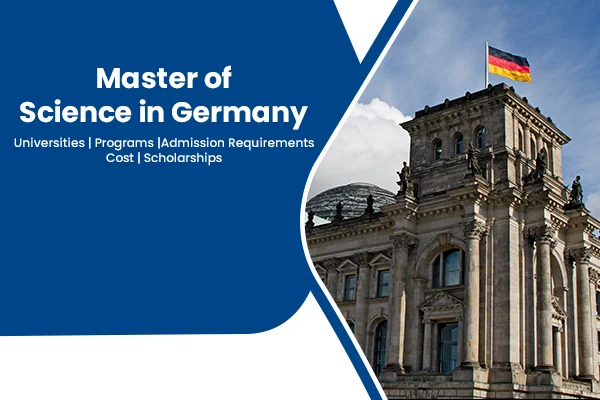
Master of Science in Germany

Master of Science in Germany

Master of Science in Germany | Universities | Programs & More

With many technological advancements going on in the field of Computer Science, pursuing a Master of Science in Germany in this field has become a popular choice for students from India and abroad. Students are attracted to Germany’s renowned education system, combined with its robust economy and rich cultural heritage, which offers an ideal environment for advanced studies. A Master of Science in Germany is not only a prestigious qualification but also a passage to great professional opportunities around the world.

Why Choose a Master of Science in Germany?

Germany is an excellent study destination for MSc students. The reasons that it is preferred by students are:

  • Quality Education- German universities are popular all over the world for their academic standards and research facilities.
  • Low Tuition Fee- Most of the public universities in Germany do not charge tuition fees or in certain cases charge very low fees from their students.
  • Variety of Streams- There are a lot of MSc programs available in various fields and specializations.
  • Strong Industry Connections- The German colleges have close industry connections and provide internships and employment options after the completion of course.
  • Cultural Experience- Germany provides exposure to the country’s cultural landscape and choice to learn a new language for foreign students.

High-ranked Universities in Germany for masters in computer science

Many German universities rank top in the list of international universities. Here are a few of these, advisable for pursuing masters in computer science in Germany and other engineering programs:

  • PFH University: The University’s MSc in Computer Science program is well-known for its industry-centric curriculum and close association with top technology companies.
  • Technical University of Munich (TUM)- The university has first rank in Germany for offering programs in engineering and technology. TUM also offers an excellent MSc in Computer Science program.
  • RWTH Aachen University- It is known for its focus on research and its computer science programs based on real-world experience.
  • Technical University of Berlin (TU Berlin)- It offers many programs in computer science that focus on innovation and offer specialization.
  • Heidelberg University: Provides a Master’s in Data and Computer Science programs with equal focus on theory and practical knowledge.
  • University of Stuttgart- The university offers programs in the computer science field that are designed as per industry needs.

Popular Master of Science Programs in Germany

Germany has a diverse range of MSc programs in almost all fields. Some of the fields in-demand include:

  • Engineering- The big three namely- Mechanical, Electrical and Civil are the most popular. Automotive Engineering is also popular due to Germany’s powerful automotive industry.
  • Computer Science- AI is changing the world, pursuing an MSc in Computer science field opens doors to opportunities in tech industries. PFH University is among the top institutions for MS in Computer Science in Germany for Indian students. It offers practical training in AI and data science applications.
  • Social Sciences- International Relations, Political Science, Sociology, and Anthropology are a few of the social science disciplines offered.
  • Environmental Sciences- Programs on sustainability are on the rise because of global emphasis on environment conservation.
  • Business and Management – Programs like MSc (or specialized MScs) focusing on international business, finance, entrepreneurship, etc.

Admission Requirements for Master of Science in Germany

Master of Science in Germany

The requirements may change from university to university, but common admission criteria is:

  • Bachelor’s degree- A relevant undergraduate degree with good marks
  • Language Proficiency: If you want to apply to English-taught programs, you need to have English proficiency proof (TOEFL or IELTS). For German-taught programs, German proficiency is required (e.g., TestDaF or DSH).
  • GRE/GATE Scores: Some programs might ask for standardized test scores.
  • Letters of Recommendations: 2 academic references needed.
  • Statement of Purpose: An essay discussing your academic interests, goals, and reasons for selecting the particular program.
  • CV/Resume: Outlining your academic and professional experience.
  • Work Experience: Some programs, particularly in the fields of business and management, may prefer or require relevant work experience.

What is the Cost of Studying an MS in Germany?

Understanding financial aspects is important for planning your studies:

  • Tuition Fees: Public universities offer free-education. Although, some federal states may charge fees from non-EU students. Private universities charge between €8,000–€20,000 a year.
  • Semester Contribution: All students have to pay a semester contribution (€150–€300) that covers administration costs and public transport.
  • Cost of Living: Students should allow approximately €992 a month for accommodation, food, transport and personal expenses.

Scholarships for Master of Science in Germany

MSc in Germany for international students can be eased financially, with the help of different scholarships:

  • DAAD Scholarship: A diverse range of funding programs by German Academic Exchange Service.
  • Deutschlandstipendium: Financial and non-material support for high achievers from all over the world.
  • Erasmus+: Scholarships to study in participating European countries.
  • Non-Governmental Scholarships: These include scholarships offered by organizations such as Friedrich Ebert Stiftung and Konrad-Adenauer-Stiftung for academic excellence and social engagement.
  • University Scholarships: A lot of universities have their own funding; check their official websites. PFH University also offers merit-based and need-based scholarships to international students.

Part-Time Jobs for MS Students in Germany

International students are allowed to work part-time to help fund their education.

  • Working Hours: Maximum 120 full days or 240 half days per year (no special permit required).
  • Work: Research assistants, tutors, café work or internships related to studies.
  • Wages: When the money is on average €10 to €15 per hour.
  • Work Regulations: Adhere to German labor laws and tax regulations to avoid problems.

Conclusion

Students who wish to study higher can consider a degree in a Master of Science in Germany for a high-quality education for less investment and promising career growth. Germany has top-ranked universities and robust job opportunities. PFH University in Germany is known for its student-centric approach and industry partnerships, is an excellent choice for pursuing MSc in Germany. Pursuing a Master of Science in Germany will help to increase your academic knowledge and give you a successful career.

Frequently Asked Questions

Yes, Germany offers high-quality education, low tuition fees and good job opportunities in the technology sector.

It depends on the program. Most universities offer MSc courses in English. But, if you are able to speak basic German, it will help you in your daily life as well as job opportunities.

Depending on the industry and job location, starting income can range from €45,000 to €60,000 per year.

Yes, Germany is known for having a strong job market, particularly for people in STEM fields. Additionally, if you have a PhD, there are opportunities in academia as well as industry.

Yes, Germany provides an 18-month post-study work visa. Graduates can use it to search for jobs after completing their studies.
Book Your Free Counselling Now

Categories
blog

PTE vs IELTS: Which Test is Your Gateway to Study in Germany

PTE vs IELTS
PTE vs IELTS

PTE vs IELTS: Which Test is Your Gateway to Studying Abroad?

Planning to study abroad can be an overwhelming experience. Firstly, the students have to decide the course and then the country from where they want to study. Irrespective of the destination and course they need to be fluent in the use of English language as most of the courses are imparted in English. They also need to submit proof of their proficiency in English. To get the same tests like PTE or IELTS etc are taken. Students often find it difficult to decide between the PTE and IELTS exam. Both tests assess English proficiency but differ in their format, scoring, and purpose. Knowing the differences between the two is crucial for making a better decision. This blog provides a detailed comparison between PTE vs IELTS and helps you decide which exam will be better suited for your academic journey.

Formats for PTE vs IELTS

One of the primary aspects that differentiates PTE vs IELTS is the format of the exam. Let’s have a look at the comparison:

PTE (Pearson Test of English) Academic
  • Mode: Computer-based test.
  • Sections: Speaking & Writing (combined), Reading, and Listening.
  • Duration: 2 hours approx.
  • Scoring: Automated, based on AI algorithms.
  • Skills Assessed: reading, writing, listening, and speaking.
IELTS (International English Language Testing System) Academic
  • Mode: Available in both computer-based and paper-based formats.
  • Sections: Speaking (separate), Writing, Reading, and Listening.
  • Duration: 2 hours and 45 minutes approx.
  • Scoring: Human examiners evaluate the writing and speaking sections.
  • Skills Assessed: Separate focus on each skill (reading, writing, listening, and speaking).

PTE’s computer-based test is selected by those students who are comfortable using technology. On the other hand, IELTS offers a traditional exam approach as it is human-evaluated (speaking test).

Difference Between PTE vs IELTS

Beyond format, there are other differences that set apart PTE vs IELTS, like scoring systems, question types, and global acceptance. Let’s check all of them:

Scoring
  • PTE: Uses an AI-powered automated scoring system. The scoring is based on precision and technical correctness.
  • IELTS: The exam is evaluated by human examiners. The IELTS exam allows more subjectivity in speaking and writing, as human evaluators may interpret responses differently.
Question Types
  • PTE: Has questions that assess multiple skills simultaneously. For instance, while reading a passage you may be asked to record a spoken summary.
  • IELTS: Questions in the IELTS exam are skill-specific. For instance, the speaking section is similar to a face-to-face interview with an examiner, while PTE’s speaking test is computer-recorded.
Test result Availability
  • PTE: Results are made available within 2 business days, which makes it a fast option for students with tight deadlines.
  • IELTS: Results take about 5-7 days for the computer-based version and 13 days for the paper-based version.

Exam Fees and University Acceptance

The exam fees and university acceptance are the additional factors that can also influence your choice.

Fees
  • PTE: The exam fee for PTE Academic is INR 17,000 which includes 18% tax.
  • IELTS: The IELTS General and Academic exam fee is INR 17,000.
University Acceptance

Before deciding to take PTE or IELTS, one must check the requirements of the universities. Both exams are accepted widely by universities globally, including those offering MS in Germany and other European nations. However, IELTS from ages has been commonly recognized by institutions in the UK, Australia, and Canada, and PTE is now gaining acceptance. So, it’s always a good idea to double-check the requirements with your university. 

For students looking to study abroad, both exams are valid options, but the exam accepted by your university can be a deciding factor.

Which Exam is Easier?

No exam is universally easier. You must focus on your comfort level with the testing format.

For PTE:
  • Strengths: Students who are tech-savvy and comfortable with fast-paced tests.
  • Challenges: The integrated skill questions can be tricky and require efficient time management.
For IELTS:
  • Strengths: Suited for those who prefer face-to-face speaking tests and a clear division between test sections.
  • Challenges: The human-evaluated sections might introduce subjectivity in speaking and writing.

Which Exam Should Students Choose?

The choice depends on several factors like your study abroad destination, university requirements, and test-taking style.

For Students Seeking Faster Results
  • PTE: PTE may be a better option for students with tight application deadlines as the results are delivered within 2 business days.
  • IELTS: IELTS remains a safe bet if you’re applying to traditional institutions, though it takes longer to receive results.

Ultimately, your decision should be influenced by your study destination, comfort with the test format, and university preferences.

Conclusion

Choosing between PTE and IELTS is a difficult decision for students planning to study abroad. Both exams are used to show English language proficiency. You must make sure which test is accepted by your chosen universities and then think about other factors. Ultimately, the best exam is the one that aligns with your strengths and the requirements of your institution. By comparing the differences in format, university acceptance, ease of test-taking, and exam fees, you can make a choice that sets you on the path to academic success abroad.

Frequently Asked Questions

Yes, PTE is gaining recognition in Germany nowadays. But all universities do not accept it yet. So, you must confirm with your selected institution first.

Neither of the exams is more difficult. If you prefer computerized tests and questions testing multiple skills together, PTE may sound better. If you’re more comfortable with a traditional human testing system, IELTS should be preferred.

Yes, you can take both tests and submit the results depending on the university’s requirements.

Both PTE and IELTS scores are valid for two years.

Book Your Free Counselling Now

Categories
blog

Guide to Study Abroad Application for Indian Students

Study Abroad Application

Guide to Study Abroad Application for Indian Students

Many Indian students dream of pursuing higher education abroad. They prefer to study abroad to get better academic exposure and at the same time, better international job opportunities. Studying abroad has become a crucial step towards a successful career. However, processing the study abroad application can be challenging if there is no right guidance. This blog provides a complete guide for Indian students to apply to international universities, particularly in Germany.

Steps for Study Abroad Application

1. Choose Your Program and Destination

The first step is to identify a field of study as per the academic interests and career aspirations followed by the country. Some popular destinations for Indian students include the USA, Canada, the UK, Germany, and Australia. Germany, for example, is well-known for its engineering programs, with many students opting for MS in Germany or M.Tech Course in Germany.

2. Research Universities and Eligibility

The next step is selecting the university. Different universities offer different programs, so compare factors such as curriculum, ranking, location, and campus life. You must also ensure that you meet the eligibility criteria namely academic performance, test scores, language proficiency, etc. Let’s consider that you wish to study in Germany. Universities here require proof of German language proficiency or English proficiency through exams like the IELTS. 

3. Prepare for Standardized Tests

Most international universities ask for scores from standardized tests to be submitted with the application. Depending on the country and program, you may require the GRE, GMAT, SAT, ACT, or other exam scores. For students applying to English-taught programs, proficiency tests such as the TOEFL or IELTS are mandatory. IELTS scores are also accepted by German universities that offer English-taught programs.

4. Financial Planning and Scholarships

Before proceeding, you must know the costs involved like tuition fees, living expenses, insurance, and travel costs. It’s worth considering that Germany is a budget-friendly option for Indian students because most public universities have little or no tuition fees. The study cost for Germany includes administrative fees, accommodation, food, and transportation. Further, many universities, government bodies, and private organizations offer scholarships to deserving students based on merit, financial need, or academic excellence.

5. Prepare a Strong Application

Application reflecting your academic abilities, skills, and motivation must be prepared. Most universities require the following documents as part of your study abroad application:

  • Statement of Purpose (SOP): It must specify your reasons for choosing the program and university and highlight your academic and career goals.
  • Letters of Recommendation (LORs): These letters by professors or employers tell your academic and professional achievements.
  • Resume/CV: A complete CV including your academic achievements, projects, internships, and work experience.
  • Academic Transcripts: Attested/certified copies of your mark sheets from your previous institutions.
  • Test Scores: Scores of standardized exams such as the GRE, GMAT, TOEFL, or IELTS.
  • Portfolio (if required): Some creative fields may require a portfolio showcasing your work.

Importantly, consider deadlines and ensure that your documents are well-organized.

6. Submit Your Application

Submit your application through the university’s website or a centralized application portal. Track the application status and provide any additional documents if requested.

For German universities, the application process usually starts months before the actual intake. Depending on whether you are applying for M.Tech courses in Germany or any other program, the deadlines vary.

7. Apply for a Student Visa

After receiving your letter of acceptance, apply for a student visa. For Germany, Indian students need a German Visa.

Steps to apply for a German visa:

  • Book an appointment with the German embassy or consulate.
  • Fill out the visa application form and submit all the necessary documents (letter of acceptance, financial proof, passport, and academic documents).
  • Attend the visa interview.
  • Wait for the visa approval, which may take a few weeks.

Keep sufficient funds, as financial proof is required for a German visa.

8. Plan Accommodation and Travel

After visa approval, plan your stay by booking accommodation either in university student housing or private accommodation. Temporary accommodation options are also available if you want to find a place after your arrival. Additionally, book your flight tickets well in advance and arrange all the documents for your travel.

9. Pre-departure Preparations

Before leaving for your destination, keep in mind:

  • Attend any pre-departure orientations or sessions by the university or consultants.
  • Get travel insurance and health insurance.
  • Pack essential items, especially considering the climate of your destination.
  • Keep ready all the important documents (visa, passport, acceptance letter, etc).
10. Settle In and Start Your Academic Journey

After reaching the destination, settle into your accommodation. Explore the university campus, and familiarize yourself with local transportation and amenities. Register with the local authorities, open a bank account, and complete any other formalities required by the university or country.

Conclusion

Studying abroad is a life-changing experience for Indian students. With careful planning, you can streamline the study abroad application process. Whether you plan to study in Germany or any other country, ensure that you are well-prepared for every stage. From choosing a program to securing a student visa. Proper research, preparation, and timely application submission are key to achieving your dream of studying overseas.

Frequently Asked Questions

The process can take from six months to one year. It depends on the country, university, and chosen program. Start early to avoid last-minute rushing.

If applying for a German-taught program, then yes. But, if you’re applying for English-taught programs, then No, but an English language test score like that of IELTS will be required.

The average cost of living for Indian students is around €850–€1,200 per month, depending on the city.

Yes, most countries permit international students to work part-time while pursuing their studies. In Germany, you are allowed to work up to 120 full days or 240 half days a year.

No, the GRE is only required for certain graduate programs, primarily in the USA. Some universities in Germany might also ask for it, but it’s not mandatory for every program.

Book Your Free Counselling Now

Categories
blog

Study Abroad in Germany

Study Abroad in Germany

Study Abroad in Germany | Guide for Indian Students

Germany is a desired destination for international students, for its world-class education, cultural experiences, and student community. If you’re preparing to Study Abroad in Germany, you would be looking for undergraduate studies, a master’s degree, an MBA, or Ph.D. studies. Germany provides all options to advance your education and career. This blog will tell you about various aspects of study abroad in Germany, including the costs, scholarships, and job opportunities after your graduation.

Study Abroad in Germany offers a combination of quality education and cultural exposure. It has more than 400 higher education institutions, among these are some of the world’s oldest and most prestigious universities. Germany also provides a broad array of courses taught in English and German at its renowned universities. You will find programs as per your academic interests and career aspirations that cover all levels of education from a bachelor’s to a doctoral degree.

Why Choose Study Abroad in Germany?

  • High-Quality Education:- With a reputation for academic excellence, German universities boast rigorous standards and state-of-the-art research facilities. Degrees from German institutions are highly respected worldwide, providing excellent career prospects.
  • Affordable Tuition Fees:- Compared to other popular study destinations like the USA, UK, and Australia, Germany offers significantly lower tuition fees, particularly in public universities where education is almost free except for a nominal administrative fee.
  • Cultural Experience:- Germany’s rich history, various cultures, and vibrant cities offer an enriching experience beyond academics. Students can explore historic landmarks, participate in cultural festivals, and enjoy the dynamic lifestyle of cities like Berlin, Munich, and Hamburg.

Master’s Degree in Germany

Study Abroad in Germany

Pursuing a master’s degree in Germany is a popular choice due to the country’s strong emphasis on research and innovation. Students can pursue degrees in a variety of fields including engineering, natural sciences, social sciences, and humanities.

Study in Germany After Graduation

For students looking to continue their education after earning a bachelor’s degree, Study Abroad in Germany is an ideal option. Study in Germany after graduation offers numerous benefits, including access to world-class research facilities and a strong emphasis on innovation. Many students study in Germany after graduation to enhance their expertise and increase their career prospects in a global job market. 

The application process for master’s courses typically involves submitting academic transcripts, a statement of purpose, and letters of recommendation. Proficiency in English or German may also be required, depending on the language of instruction.

MBA in Germany for Indian Students

An MBA in Germany for Indian students attracts students due to the quality of education and the potential for lucrative career opportunities. The country has a lot of prestigious business schools offering MBA programs to international students making Study Abroad in Germany a fruitful choice.

The fees for MBA programs in Germany vary by institution. On average, the cost ranges from €20,000 to €40,000 per year. However, many institutions offer scholarships and financial aid to help students, reduce their financial burden.

Top Private Universities Offering MS in Germany for Indian Students

Public universities in Germany have a high value and preference. On the other hand, private institutions also offer excellent MS programs. Top private universities for Study Abroad in Germany include:

  • PFH University: The university offers master’s programs in engineering and MBA.
  • WHU: Otto Beisheim School of Management: Popular for its strong business and management programs.
  • EBS University of Business and Law: Offers specialized programs in business and finance.
  • Hertie School: Focuses on public policy and international affairs.

Tuition Fees & Scholarships

Tuition Fees & Scholarships

Tuition Fees:- As mentioned, tuition fees at public universities are minimal, covering administrative costs. Private universities, however, charge higher fees, which can range from €10,000 to €30,000 per year depending on the program.
Scholarships:- International students seeking financial aid will find a wealth of scholarship opportunities in Germany. The popular ones are:

1)DAAD Scholarships: Cover tuition and living expenses for various programs. These are funded by the German Academic Exchange Service and are available for multiple degree programs.
2)Deutschlandstipendium: This merit-based scholarship provides financial support regardless of nationality. Provides €300 per month for qualified students.
3)Erasmus+: Offers scholarships for students within the European Union and partner countries.

Working in Germany After Master’s Degree

Germany offers favorable conditions for international students wishing to stay and work after completing their master’s degree. German universities provide graduates with an 18-month residence permit to facilitate their job search within their area of study after graduation. Once employed, they can apply for a German work visa or EU Blue Card.

What Engineering Courses Are Available for Study Abroad in Germany for Indian Students?

Germany is renowned for its engineering programs. Popular courses include:

  • Mechanical Engineering
  • Electrical Engineering
  • Civil Engineering
  • Computer Science and Engineering
  • Automotive Engineering
  • Aerospace engineering
  • Industrial engineering

These programs are available at both undergraduate and postgraduate levels, with many institutions offering courses in English.

What Other Costs Do I Have to Consider for Study Abroad in Germany?

  • Living Expenses:- The cost of living in Germany fluctuates across different cities. On average, students should budget around €850 to €1,200 per month for accommodation, food, transportation, health insurance, and other personal expenses.
  • Health Insurance:- All students in Germany are required to possess a health insurance policy. Public health insurance costs around €80 to €100 per month, while private insurance can vary.

Conclusion

Study Abroad in Germany offers an unparalleled opportunity to receive a world-class education while experiencing a rich cultural environment. With affordable tuition fees, numerous scholarships, and favorable post-graduation work conditions, Germany is a prime destination for international students. Whether pursuing a master’s degree, an MBA, or specialized courses like engineering, Germany provides the resources and support to help you succeed academically and professionally.

Frequently Asked Questions

To obtain a study in Germany visa, you need to:

  • Secure admission from a recognized German institution.
  • Provide proof of financial resources.
  • Submit health insurance coverage.
  • Prove proficiency in the language of instruction (English or German).
  • Schedule and attend your visa interview with the German authorities.

Improving your scholarship chances involves:

  • Maintaining a strong academic record.
  • Demonstrating leadership skills and extracurricular involvement.
  • Crafting a compelling personal statement.
  • Obtaining letters of recommendation.
  • Researching and applying to multiple scholarship programs.

Indian students need to:

  • Obtain a valid student visa.
  • Provide proof of academic qualifications.
  • Demonstrate language proficiency (IELTS/TOEFL for English, TestDaF/DSH for German).
  • Show financial capability to support their stay.

Yes, international students can work part-time for up to 120 full days or 240 half days per year. This helps cover living expenses and provides practical experience.

Germany offers various opportunities post-graduation, including:

  • Applying for an 18-month job-seeking visa.
  • Pursuing further studies like a Ph.D.
  • Gaining work experience through internships and job placements in German companies.

Book Your Free Counselling Now