Categories
blog

MSc in Germany for International Students

MSc in Germany for International Students

MSc in Germany for International Students

Over the past few years, MSc in Germany for international students has become a preferred career plan for many Indian students rather than being just an option. The reason is that Germany has a strong reputation for its research-focused universities, practical based teaching methods, and degrees that are respected across the world. In fact, data from the German Academic Exchange Service (DAAD) shows that Germany hosts more than 450,000 international students, making it one of Europe’s most welcoming study destinations.

But pursuing an MSc in Germany for international students is not only about getting a postgraduate qualification. It is about attending a university where the theoretical part is blended with real-world applications, the lecturers are the industry experts and researchers who share their experience with the students, and the students get to know one of the biggest and most prosperous economies in the world. For most, it is the launching point of their international career in the land of innovation and forward thinking.

Why Choose Germany for an MSc?

There are several practical reasons why students prefer an MSc in Germany for international students:

1. Low or No Tuition Fees
Most public universities charge very minimal tuition fees. Students only have to pay a semester fee, which is between €150–€350.

2. Globally Valued Degrees
A degree from German universities has a high value globally as Germany provides strong academic standards and research focus.

3. Strong Economy and Industry Links
Germany is the largest economy in Europe and also is a home to global companies in engineering, IT, automotive, and manufacturing sectors.

4. English-Taught Programs
MSc programs mainly are taught in English. This makes adaptation easy for international students.

These benefits make MSc in Germany a strong choice compared to other destinations.

Popular MSc Courses in Germany

Popular MSc Courses in Germany

When planning an MSc in Germany for international students, the most important thing is choosing the right course. Engineering fields remain highly preferred which include:

  • MBA – Master of Business Administration
  • MSc. in General Management
  • MSc. in UX Management & Design
  • MSc. in AI Management
  • Mechanical, Automotive, and Electrical Engineering
  • Data Science and Artificial Intelligence
  • Renewable Energy
  • Biotechnology
  • Business Analytics
  • Finance

In recent years, among technical programs, MSc computer science in Germany has seen significant growth in demand due to Germany’s fast-growing tech ecosystem. With expansion in AI, data analytics, and cybersecurity, MSc computer science in Germany offers strong job prospects both within Germany and across Europe.

Top Universities in Germany for Masters

Germany has over 400 higher education institutions. Several of them are ranked among the best worldwide and are especially recognized for their research and innovation. These include:

  • PFH University of Applied Sciences
  • Technical University of Munich known as TUM
  • RWTH Aachen University
  • Heidelberg University
  • Karlsruhe Institute of Technology or KIT

These schools are the top universities in Germany for masters which provide research-oriented programs with academic rigor. They also have solid industry collaborations. One must base their decision for the right institution based on the course structure, research possibilities, and career objectives. 

Hence, students must consider multiple universities in Germany for masters before finalizing their choices.

Admission Requirements for MSc in Germany

Admission Requirements for MSc in Germany

MSc in Germany for international students application requirements generally consist of:

  • A recognized Bachelor’s degree in a relevant field
  • Minimum academic percentage, usually above 65–70% for competitive programs
  • IELTS or TOEFL for English-taught programs
  • GRE – required by some technical universities
  • Statement of Purpose or SOP
  • Letters of Recommendation

To apply for masters in Germany for Indian students, APS certification has become compulsory for getting a student visa. The admission process is competitive, but careful preparation of documents improves the chances of securing masters in Germany for international students.

Cost of Studying and Living

A major advantage of pursuing an MSc in Germany for international students is financial affordability.

  • Tuition Fees: Public universities don’t charge tuition fees but need a small semester contribution.
  • Living Expenses: According to DAAD estimates, students require €934 per month for rent, food, insurance, transport, and personal expenses.

MSc in Germany students must also open a blocked account. The overall expenses are much lower as compared to the US or UK, , which makes masters in Germany for Indian students more attractive.

Scholarships for International Students

Although tuition fees are affordable, students can also secure scholarships in order to cover their living expenses. Some common scholarships are: 

  • DAAD Scholarships
  • Deutschlandstipendium
  • University-specific merit scholarships

These scholarship options support masters in Germany for international students who have academic excellence or need financial support.

Career Opportunities After MSc

Germany provides good career options after studies. After completing MSc in Germany for international students, can get an 18-month stay visa for finding a job. Germany has a shortage of qualified professionals in: 

  • Information Technology and Software Development
  • Engineering
  • Health Care
  • Research and Innovation

Tips to Successfully Secure Admission

Getting into a good MSc program requires planning:

  • Begin research at least 12 months before.
  • Shortlist universities and programs carefully.
  • Write a personalized SOP to highlight your academic and career goals.
  • Apply before deadlines.
  • Prepare finances early.

Indian applicants planning masters in Germany for Indian students should also track visa timelines and APS processing carefully.

Conclusion

Deciding to pursue an MSc in Germany for international students is a strategic move to access global education as well as career growth. The combination of low tuition fees, great academic standards, and brilliant career opportunities make Germany a favorable destination for ambitious students globally.

It does not matter if you are considering an MSc in Germany in engineering, business, or MSc computer science in Germany, the country provides a strong academic infrastructure and industry exposure.

At PFH University of Applied Sciences, we guide students through application support, APS process, blocked account assistance, and visa documentation to make your journey toward masters in Germany for international students smooth and stress-free.

Frequently Asked Questions

Germany is a good option due to the three factors education is excellent, prices are affordable, and the labor market is stable.

In most English-taught programs, it isn’t compulsory at the beginning, though picking up the language during your studies helps a lot later.

It is generally about two years as most courses are planned for four semesters.

Not compulsory, but some technical institutions need it for a few programs.

This depends on the course structure and university. However, most masters programs have internships or industry projects.

Book Your Free Counselling Now

Categories
blog

Best Courses to Study in Germany

Best Courses to Study in Germany

HIGHEST PAYING SALARY - Best Courses to Study in Germany

In today’s rapidly evolving landscape of job market, students want education that is affordable, practical, and opens doors to worldwide opportunities. Countries like the US and UK have been popular among students, but they come with a high tuition fees and tough visa rules. That’s why many Indian students are now choosing Germany for it provides top-class education, strong industry ties, and tuition-free education/ low-cost study options at public universities. Among the leading institutions that offer top programs according to the industry needs is PFH University Germany. It puts a focus on educational excellence and employability. The university provides best courses to study in Germany and along with these offers scholarships to deserving students.

Why Choose Germany for Higher Education?

Germany is becoming exceptionally famous for education due to many reasons. These attractions are listed below:

  • Education affordable for Indian middle-class: The public universities have made quality education accessible by not charging tuition fees. While private universities like PFH University Germany charge fees and offer high-value programs.
  • Globally Recognized Degrees: Degrees from German universities have a high-value, and thus students get employment options world-wide.
  • High-Quality Infrastructure: Universities here have advanced laboratories, libraries, and research centers.
  • Strong Industry Linkages: German universities partner with companies like BMW, Volkswagen, Bosch, Siemens, etc. PFH University Germany also provides its students, real-world exposure with the help of internships and projects at excellent companies.
  • Safe and Student-Friendly campuses: Universities here have multicultural campuses and cities also have affordable living-costs.
  • Work-visa after Studies: Students are allowed to stay for 18 months after graduation to find a job.

Which are the Best Programs to Study in Germany?

Which are the Best Programs to Study in Germany

When students ask what are the best courses to study in Germany, the answer is simple- it depends on their career goals at the same time some disciplines look more rewarding because of industry demand. Here are the best courses to study in Germany for Indian and international students:

  • Engineering – When it comes to engineering study abroad, Germany is considered to be the ideal place. Best Engineering Courses to Study in Germany include the fields like Mechanical, Electrical, Civil, Automotive, and Computer Engineering.
  • Computer Science & IT – As digital revolution becomes increasingly pertinent, Artificial Intelligence, Data Science and Cybersecurity courses in Germany are the some that are recognised in the world.
  • Management Studies (MBA) – The German MBA program is highly considered for anyone who has plans to get into leadership positions.
  • Medicine & Life Sciences – With cutting-edge research and medical facilities, studies in medicine and pharmacology are also popular with foreign applicants.
  • Business & Finance – Courses in international business as well as Economics and Finance are other preferred programs for students looking to work in corporate/financial fields.
  • Architecture & Design – With Germany’s rich cultural history and modern design industry, aspiring architects consider Germany as their top study destination.

Students can identify the best courses to study in Germany for masters or bachelor’s programs according to their long-term career plans.

Top Universities Offering These Courses

Germany has top-ranked universities in Europe and world. Some of these leading universities are:

  • PFH University Germany – A reputed private university, well-regarded for its English-taught master’s programs, personalized teaching, small batch sizes, industry connections, and high employability rates. It also has a strong alumni network and close collaborations with industry across Germany.
  • Technical University of Munich (TUM) – This is the top university in Germany. It has programs in engineering, IT, natural sciences and almost all other fields.
  • Ludwig Maximilian University of Munich (LMU) – LMU is another excellent German university. It has excellent programs in humanities, medicine, and law.
  • RWTH Aachen University – This is another top-ranked institution. It has some best courses in mechanical, electrical engineering and more.
  • Heidelberg University – Famous for providing top courses. The university has excellent programs in medicine, life sciences, etc. that are research-focused.
  • Karlsruhe Institute of Technology (KIT) – KIT is a famous name for programs in computer science and engineering etc.
  • Frankfurt School of Finance & Management – Eminent name for providing programs in business, finance, and economics etc.

Courses with High Job Opportunities in Germany

Germany has a strong economy and thus skilled professionals highly in demand. Courses that are according to industry needs provide students with many job opportunities after graduation. Some of these career-oriented and best courses to study in Germany are:

  • Mechanical Engineering: These engineers are always in demand in automotive and manufacturing industries.
  • Information Technology & Data Science: IT professionals are always needed in companies across this sector for digital growth.
  • Healthcare & Medicine: Germany is always in need of medical professionals which creates job opportunities in this field.
  • Finance & Accounting: Graduates of this field can find high-salaries in banks, multinational corporations, and consulting firms.
  • Renewable Energy & Environmental Studies: Sustainability is the top priority, thus many job options are available in this sector.

Expected Salaries After Studying in Germany

Pursuing the best courses to study in Germany is a way to earn attractive salary packages. Let us have a look at what students can expect after completing their course. Graduates from Engineering disciplines can earn €50,000 – €65,000 p.a. which is approx. ₹45–58 lakhs. IT graduates are paid €55,000 – €70,000 annually, in INR its ₹49–62 lakhs. Medical graduates earn ₹58–71 lakhs every year (between €65,000 – €80,000), while Finance & Business Graduates are offered €50,000 – €65,000 which is ₹45–58 lakhs. Architecture & Design students can expect €39,000 – €54,999 (approx. ₹36–49 lakhs).

These salaries highlight that graduating from universities like PFH ensure high employability and good salaries.

Conclusion

PFH University Germany perfectly caters to the needs of Indian students by offering best courses to study in Germany as per the industry demand. From engineering management to PFH’s MBA programs, students get global opportunities for employment, practical experience, and advanced skills. PFH provides the right mentorship and thus, students can begin their academic journey which is fruitful.

Frequently Asked Questions

When it comes to living expenses in Germany for Indian students, students need an amount between €680 and €1,120 per month depending on the city and the lifestyle.

Two major intakes: Summer (April) and Winter (October). Winter is more popular among Indian students.

Yes, degrees from PFH University Germany are recognized in Europe and worldwide. Students can easily finds jobs internationally.

Public universities have low or no tuition fees, PFH University charges fee, but, offers smaller class sizes, personalized teaching, and stronger links with industries, for better employability.

Yes, PFH University Germany offers best master’s programs entirely in English.

Book Your Free Counselling Now

Categories
blog

Master’s Programs in Germany in English

English-Taught Master's Programs in Germany | PFH India
🎓 PFH UNIVERSITY — STUDY IN GERMANY

Discover the Best English-Taught Master's Programs in Germany

Unlock new opportunities with internationally recognized qualifications, low tuition, and career growth. PFH India guides Indian students to top institutions offering specialized Master's degrees in engineering, AI, MBA, and more.

100% Job Assurance State Recognized Industry Oriented
Master's Programs in Germany
🏆 Top World-Class University
40+
English-Taught Master's Programs
€0-500
Annual Tuition Range
90%
Student Employment Rate
150+
Partner Universities

Why Choose Germany for Your Master's Degree?

🎓

World-Class Education

German universities are globally recognized for research excellence and innovative teaching methods. Your degree will be valued worldwide.

💰

Affordable Tuition

Many public universities charge zero or minimal tuition fees for Master's programs, making quality education accessible to international students.

🔬

Research Opportunities

Access cutting-edge research facilities and collaborate with leading academics on projects that matter globally.

🌍

Multicultural Environment

Study alongside students from 150+ countries. Build international networks and gain cross-cultural competencies employers value.

💼

Career Advancement

German degrees are highly respected by employers worldwide. Strong salary prospects and career opportunities await graduates.

🛫

Easy Work Permissions

Post-study work visa options allow you to gain professional experience in Germany and expand career opportunities globally.


Ready to Start Your German Master's Journey?

Join thousands of Indian students who've successfully pursued Master's degrees in Germany. PFH India is here to guide you through every step—from program selection to post-graduation career planning.

Fill out the enquiry form and our expert counselors will contact you within 24 hours with personalized guidance tailored to your goals.

Quick Enquiry Form

Popular Master's Programs in Germany

⚙️

Engineering & Technology

Mechanical, Electrical, Civil, Aeronautical

  • Aeronautical engineering in Germany with top labs
  • Industry partnerships with leading companies
  • Practical project-based learning
  • Post-graduation work opportunities
🤖

Artificial Intelligence & ML

Master's in AI, Data Science, Robotics

  • Masters in AI in Germany with cutting-edge curriculum
  • Deep learning and neural networks focus
  • Tech industry internships available
  • High global demand for graduates
💼

MBA & Business

Business Administration, Management

  • MBA in Germany for Indian students
  • Leadership and entrepreneurship training
  • International business exposure
  • Strong alumni networks globally
💻

Computer Science

Software Engineering, Cybersecurity

  • Modern programming frameworks and tools
  • Cloud computing and distributed systems
  • Tech startup connections
  • Excellent job market demand
🏗️

Master's in Engineering

Structural, Environmental, Industrial

  • Masters in engineering in Germany specializations
  • Sustainable engineering focus
  • Research-based capstone projects
  • Engineering consulting opportunities
🔬

Research & Innovation

Science, Technology, Biotechnology

  • Advanced laboratory facilities
  • Academic research opportunities
  • PhD pathway options
  • Publication and conference participation

Application Timeline & Process

📅 12 Months Before

Start researching programs, universities, and specializations that match your career goals. Register for IELTS/TOEFL exams and prepare for language proficiency tests.

📝 6-8 Months Before

Complete standardized tests (GMAT/GRE if required). Prepare application documents: transcripts, motivation letters, and CV. PFH India provides personalized guidance here.

🎯 4-5 Months Before

Submit applications to chosen universities through their portals. Meet application deadlines (typically December to February for Fall intake).

✅ 2-3 Months Before

Receive admission decisions and offers. Compare programs, scholarships, and financial aid packages. Accept your chosen offer within specified deadlines.

🛫 1 Month Before

Complete student visa application with required documentation. Arrange accommodation, book flights, and prepare for arrival in Germany.

🎓 Start Date

Begin your Master's program with orientation. Register at university, complete enrollment, and start your academic journey with support from PFH India.

Need help with your application timeline? Our experts can create a personalized plan for you.

Master's Admission Requirements in Germany

Essential Documents & Qualifications

  • Bachelor's Degree: A recognized Bachelor's degree (or equivalent) in a related field from an accredited institution
  • English Language Proficiency: IELTS (6.5+ bands) or TOEFL (90+ iBT) scores demonstrating English competency
  • Academic Transcripts: Official transcripts and degree certificate showing GPA and coursework details
  • Motivation Letter: A compelling statement (500-800 words) explaining your academic interests and career goals
  • Curriculum Vitae (CV): Comprehensive CV highlighting education, work experience, skills, and achievements
  • Recommendation Letters: Typically 2-3 letters from professors or employers who can vouch for your academic and professional capabilities
  • Passport Copy: Valid passport with sufficient validity for your stay in Germany

Program-Specific Requirements

  • Engineering Programs: May require GMAT or relevant entrance exams; technical background verification
  • MBA Programs: Often require GMAT/GRE scores; some programs may ask for work experience (typically 2-5 years)
  • AI/Data Science: Strong mathematics and programming background; coding portfolio may be requested

PFH India helps Indian students prepare comprehensive applications that meet all requirements and showcase their unique strengths effectively.

Cost of Living & Studying in Germany

Tuition Fees

  • Public Universities: €0-500 per semester in most German states for Master's programs
  • Private Universities: €10,000-25,000 per year for specialized programs
  • Application Fee: €50-100 (non-refundable) per university

Living Expenses (Monthly Budget)

  • Accommodation: €400-800 (student dorms or shared apartments)
  • Food & Groceries: €150-250
  • Transport Pass: €50-100
  • Health Insurance: €100-120
  • Leisure & Miscellaneous: €100-200
  • Total Monthly Budget: €800-1,470

Scholarships for Indian Students

  • DAAD Scholarships: Monthly stipend (€934+) covering living costs and health insurance; highly competitive
  • University-Specific Awards: Merit-based scholarships from PFH University and partner institutions for outstanding international candidates
  • Erasmus Mundus Scholarships: Joint program scholarships covering tuition and living expenses
  • Government Scholarships: India-Germany bilateral scholarship programs

PFH India assists students in identifying and applying for scholarships that match their profile and academic achievements.

Reduce your study costs with scholarships! Let our experts help you find funding opportunities.

Career Opportunities After Your Master's in Germany

Post-Study Work Opportunities

  • Job Seeker Visa: 18-month residence permit to find employment in Germany after graduation
  • Blue Card EU: Eligibility for highly skilled professionals earning competitive salaries (€45,000+ annually)
  • Permanent Residency: Path to permanent residence after consistent employment in Germany

Popular Career Paths

  • Engineering & Aeronautical Engineering in Germany: Roles at Siemens, Bosch, Airbus, Deutsche Bahn, and automotive companies. Average salary: €55,000-75,000 annually
  • AI & Technology: Software engineer, AI specialist, data scientist at SAP, Zalando, SoundCloud, and emerging tech startups. Average salary: €60,000-85,000
  • MBA Graduates: Management consultant, business analyst, entrepreneur. Average salary: €58,000-90,000+
  • Research & Academia: PhD pursuit or research scientist positions in universities and Max Planck Institutes

Global Career Growth

  • German Master's degrees are highly valued internationally across Europe, US, and Asia
  • EU mobility allows work across 27 European countries for EU citizens and eligible graduates
  • LinkedIn research shows German Master's graduates have 35% higher salary growth in 5 years

With PFH India's career guidance, you'll be well-prepared to leverage your German education globally.

Student Life for Indian Students in Germany

Academic Experience

  • Small class sizes and personalized instructor attention
  • Access to state-of-the-art research facilities and laboratories
  • Collaborative projects with industry partners
  • Guest lectures from leading professionals and researchers

Cultural & Social Life

  • Active student societies covering diverse interests (cultural, academic, sports)
  • Regular cultural festivals celebrating traditions from around the world
  • Networking events connecting students with alumni and employers
  • Sports facilities and recreational clubs at universities

Support Services for International Students

  • Academic Support: Writing centers, tutoring, and academic counseling
  • Mental Health Services: Counseling and psychological support (often free or subsidized)
  • Career Services: Resume help, interview prep, and job placement assistance
  • International Office: Visa guidance, accommodation assistance, and integration support

Living in German Cities

  • Germany offers excellent public transportation (efficient and affordable)
  • Safe, clean cities with high quality of life
  • Rich cultural heritage with museums, theaters, and historic sites
  • Easy travel across Europe for exploring neighboring countries during breaks

Indian student communities exist in major German cities, providing cultural connection while you build international networks.

Want to know more about student life and city selection in Germany?

How PFH India Supports Your Master's Journey

Comprehensive Services We Offer

  • Program Selection Guidance: Matching your academic background and career goals with ideal Master's programs across German universities
  • Application Document Preparation: Expert help with crafting compelling motivation letters, CV refinement, and portfolio development
  • Admission Strategy: Personalized counseling on university selection, application timing, and deadline management
  • Scholarship Identification: Research and guidance on DAAD, university-specific, and bilateral scholarships you're eligible for
  • Visa & Documentation: Support with student visa applications, financial proof documentation, and required paperwork
  • Pre-Arrival Support: Accommodation assistance, city orientation guides, and preparation for your move to Germany

PFH India Advantages

  • Direct partnership with PFH University and other leading German institutions
  • Experienced counselors familiar with Indian student needs and perspectives
  • Proven track record of successful student placements
  • Post-admission support during your transition and initial studies
  • Alumni network connecting you with graduates in your field

Whether you're interested in aeronautical engineering in Germany, masters in AI in Germany, or MBA in Germany for Indian students, we're committed to making your international education journey seamless.

Ready to start your Master's application? Schedule a consultation with our expert counselors today!

Frequently Asked Questions

What are the best Master's programs for Indian students in Germany?

+

Top programs include engineering (especially aeronautical, mechanical, electrical), artificial intelligence and machine learning, MBA and business administration, computer science, and research-focused disciplines. Universities like TU Munich, TU Darmstadt, and Technische Universität Berlin consistently rank highly. The choice depends on your background, career goals, and interests. PFH India can help match you with the perfect program.

How much does it cost to study a Master's in Germany?

+

Most public universities charge minimal to no tuition (€0-500/semester), though this varies by state. Living costs range from €800-1,470 monthly. Total 2-year program cost (including tuition and living): €20,000-35,000. Private institutions charge €10,000-25,000 annually. Scholarships like DAAD can significantly reduce these costs.

Do I need German language skills to study Master's in Germany?

+

Not necessarily. Most Master's programs offered to international students are taught entirely in English. You'll need English proficiency (IELTS 6.5+ or TOEFL 90+) instead. Learning German is optional but helpful for daily life, part-time work, and post-graduation employment. Many universities offer free German courses for international students.

What is the application process for Master's programs?

+

Typically: (1) Research and choose programs, (2) Gather documents (transcripts, motivation letter, CV, language test scores, recommendations), (3) Submit applications through university portals before deadlines (usually December-February), (4) Receive admission decisions (April-June), (5) Accept offer and arrange visa. PFH India guides you through each step efficiently.

Can I work while studying a Master's in Germany?

+

Yes! International students can work up to 20 hours per week during semesters and full-time during semester breaks. This helps cover living expenses. Student jobs, research assistant positions, and internships are common. Working in your field of study enhances both income and career prospects.

What are career prospects after graduation?

+

Excellent. German Master's graduates have 85%+ employment rates, with average starting salaries of €50,000-75,000 depending on field. You can stay in Germany via job seeker visa (18 months) or Blue Card EU for skilled workers. Global opportunities are abundant as German degrees are internationally recognized. Engineering and tech graduates have particularly strong prospects.

What scholarships are available for Indian students?

+

Main options include DAAD scholarships (€934+ monthly), university-specific merit scholarships, Erasmus Mundus programs, and government bilateral scholarships. Eligibility varies by academic record, financial need, and field of study. PFH India helps identify scholarships matching your profile and submit competitive applications.

How does PFH India help with admissions?

+

PFH India provides end-to-end support: personalized program selection, document preparation, application strategy, scholarship guidance, visa assistance, and pre-arrival support. Our partnership with German universities gives us insider knowledge and direct connections, improving your application prospects significantly.

Master's Programs in Germany in English

Master's Programs in Germany in English: Your Guide to a Global Degree

You’ve finished your bachelor’s and now you’re looking for a master’s program to get the exposure, not just academically, but globally. Among the preferred study destinations is Germany, well-known for its academic excellence, offering numerous master’s programs in Germany in English. From tech degrees to an MBA, Germany is a place where ambition meets opportunity. Choosing Germany could be a great move.

In this guide, we’ll tell you everything—from program types and top universities, how to apply, and what it costs. Whether you’re planning to study AI, business, or engineering, you can easily find master’s programs in Germany that match your goals.

Why Choose Germany for a Master’s?

Germany is a non-English speaking country that provides numerous master’s programs in Germany in English. More than 400,000 international students opt for Germany, with 34,702 students from India. The reasons for more and more students choosing Germany for higher studies are:

  • Excellent Education- German universities are well-known around the world for their education.
  • No or Low Tuition Fees- Studying is free at public universities. Private ones charge fees but give scholarships to help.
  • Globally Recognized Degrees- A master’s degree in Germany for international students is valued by employers in most countries.
  • Innovation Hub- Germany is ahead in research, tech, and business. Graduates can find careers in AI, management, or product design.
  • English-Taught Programs- German universities provide courses that are taught in English for international students.

Types of Master's Programs in Germany in English

Germany offers master’s programs that are meant for international careers. The following are the popular fields:

  • Engineering and Technology – These are the most important fields in Germany in terms of academia and industry.
  • AI Master Programs in Germany – Opportunities in AI are popular because of the emphasis on digital transformation. Universities like PFH offer advanced master’s programs.
  • MBA in Germany for International Students – MBAs are tailored for the global business world, especially in English. You can consider PFH University for MBAs and other business and management programs.
  • Sustainability, Design, and Innovation – These are some of the most important programs because of Germany’s leadership in green technologies and product design. 

PFH offers master’s programs in Germany in English, built around the needs of international students with small class sizes, career services, internships, and corporate partnerships. Whether one pursues an MBA in Germany for international students or a tech-oriented degree, programs are designed to enable students to launch global careers.

Top Universities in Germany for Masters

Germany has some of the best and oldest universities in Europe that have high international rankings. 

Public Universities, a few of them are:

  • TUM – Offers English-taught programs in technology, industrial design, and engineering.
  • University of Heidelberg – Known for its English-taught programs in areas like life sciences and global-level research.
  • RWTH Aachen University – industrial and mechanical engineering.

Private Universities–They offer skill-based master’s programs in Germany in English, like business and tech. Universities like PFH give personal guidance, flexible classes, scholarships, internships, and a close student group to help you succeed in a job.

How to Apply for a Master’s in Germany?

You can follow these steps to apply for a master’s degree in Germany for international students: 

  • Pick a Program: based on university, location, language of teaching, and the field of study.
  • Fulfill the Criteria: You must have a bachelor’s degree, proof of Language proficiency for English (IELTS, TOEFL score), SOP, resume, and recommendation letters.
  • Applications: Applications can be submitted through university portals. PFH University also allows students to apply online.
  • Apply for a Visa: After receiving the admission letter, apply for a student visa at the German Consulate. 

Aim to apply 6-8 months before the semester begins; most programs begin in October, with some offering a spring intake in March or April.

Cost of Studying and Living in Germany (In INR)

Cost of Studying and Living in Germany (In INR)

Cost-wise, Germany remains an affordable destination for Indian students as compared to the USA, UK, or Australia. However, understanding the average costs helps in financial planning. 

Tuition Fees 

  • Public Universities: Public universities do not ask for tuition fees. But, there is a semester fee for student services and administrative costs (250-350 Euros – ₹22,500 to ₹31,500).
  • Private Universities: Institutions like PFH Private University of Applied Sciences provide English-taught programs, with tuition fees around €8,100 -₹7,29,000 per semester. They also offera scholarship to manage the living expenses.

Living Expenses (Per Month)

  • Students spend – ₹27,000 – ₹45,000
  • Accommodation – ₹13,500 – ₹22,500
  • Food/ groceries – ₹9,000–₹11,000
  • Transportation and utilities, and for Health insurance, approximately – ₹9,000.

Apart from using education loans and scholarships, students can work part-time to better manage their funds.

Part-Time Work Opportunities for Students

International students in Germany can work for:

  • 120 full or 240 half days per year
  • Can take part-time jobs or internships in fields of their studies.
  • They usually earn €10–€15 on average.

Universities like PFH help students meet companies through events and projects to find relevant internships or part-time jobs. Students earn about €10 to €15 per hour in part-time jobs. If you are studying an AI master’s programs in Germany or an MBA in Germany for international students, part-time work can lead to full-time jobs later.

Conclusion

Germany is an excellent choice to study abroad. It gives high-quality education at low cost, with good job chances after graduation. Master’s programs in Germany in English are available in multiple fields, you can easily find one to suit your profile. Private universities like PFH offer practical training and help you connect with companies. In conclusion, Germany is a smart choice to study master’s programs in Germany in English, like MBA, AI, design, or management.

Frequently Asked Questions

Yes. Universities provide many find master’s programs in Germany. But knowing German helps in everyday communication.

Yes. Graduates from German universities are valued and have an easy option in Europe and many other countries.

Public universities often have no tuition fees. Private institutions like PFH charge around €16,000 – €20,000 per year.

Yes. Students can work part-time up to 120 days a year.

It’s great. As per German law, graduates get up to 18 months for job searching, which they generally get within this period.

Book Your Free Counselling Now

Categories
blog

Living Expenses in Germany for Indian Students

Living Expenses in Germany for Indian Students

Living Expenses in Germany for Indian Students

For many Indian families, sending a child abroad is not merely an academic choice; rather, it is a full-fledged investment. It involves emotional and financial planning. The steps like which country to choose, university selection, program selection, accommodation, insurance, visa and other arrangements also require proper arrangements. Germany is one of the best study destinations for Indian students because it is budget-friendly and gives full value for money.

However, the primary concern is knowing the living expenses in Germany for Indian students beyond the tuition fees. In this blog, we have provided a breakdown of the living expenses in Germany for Indian students, so that you and your family can plan wisely and confidently.

What is the Living Expenses in Germany for International Students?

Public universities in Germany give free education but living expenses in Germany for students needs to be paid. Reputed private universities like PFH do charges for tuition but give scholarships to reduce financial burden. Studying at universities like PFH is a powerful step for a global career, but other living expenses in Germany for Indian students need to be managed. These include:

  • Rent & Utilities
  • Groceries & Food
  • Health Insurance
  • Public Transport
  • Phone/Internet
  • Study Materials & Other Essentials

The living expenses in Germany for Indian students change because of cities, lifestyles, and types of accommodation.

How to Prepare Financially Before Coming to Germany?

How to Prepare Financially Before Coming to Germany

Before moving ahead with admission process, one must prepare their finances beforehand. You must prepare for:

  • Blocked Account: Indian students are required to have a German blocked account with around €11,208 (approximately ₹10 lakh) to validate their financial solvency for visa application purposes.
  • Tuition Fees: Private universities charges tuition fees, budget this also.
  • Emergency Expenses: Keep an extra ₹1 to 2 lakh for any unforeseen expenses like medicals, visa-renewals, or course-materials.
  • Scholarships: Check for your eligibility because universities like PFH offer scholarships and financial assistance.
  • Conversion Rates: The actual spending may be different due to the Euro – INR conversion rates.

Average Living Expenses in Germany for International Students per Month

According to Statista (2024), the living expenses in Germany for international students on an average is €934 per month. It divides as:

The average cost of living in Germany for Indian students, lies between €680 and €1,120, which is ₹61,000 and ₹1,00,800 (excluding tuition), this can change according to city or student lifestyle.

City-Wise Cost of Accommodation in Germany

The house rent differs by different cities. Below is the average rental charges in Euros in different German cities:

If you’re pursuing your studies at the Göttingen or Stade campus, you may benefit from relatively cheaper rent compared to students in Berlin or Munich.

Tips to Manage Your Budget

Here are some proven options that students can use to reduce their living expenses in Germany:

  • Wohngemeinschaften (WGs): Costs can be reduced by sharing a flat with other roommates.
  • Use the PFH Support System: PFH assists students in finding possible accommodation and provides various resources to help reduce costs.
  • Restock Items Smartly: Shops like Aldi, Lidl, or Netto offer cheaper groceries and food.
  • Semester Tickets: You can money by using local trains and public transportation by available through Semester Tickets.
  • Learn to Cook: Eating out is tempting, but it may lead to overspending. Cooking simple Indian recipes yourself is a much better idea.
  • Work Part-Time: Students can work 20 hours a week with studies and full-time during holidays.
  • Track Spending: Use mobile apps or online trackers for easy management of funds.

With a little proactivity, you can easily manage the cost of living for international students in Germany.

Conclusion

Studying in Germany is a giant leap towards a global career. For many Indian parents, sending their children abroad comes with financial responsibilities. The average cost of living in Germany for Indian students is generally the same range as the cost of living for international students in Germany, which may change according to the spending habits and city choices. On an average, they need €934 per month approximately as living expenses in Germany for Indian students.

Whether you’re planning to study in Munich, Berlin, Stade, Göttingen, or any other city, the budget should be smartly strategized at all costs. The good news is affordable cities and the option to work while studying make students get a high-quality education.

Frequently Asked Questions

When it comes to living expenses in Germany for Indian students, students need an amount between €680 and €1,120 per month depending on the city and the lifestyle.

Yes. PFH provides partial scholarships and financial assistance for eligible students. Please consult PFH to know in detail about the living expenses in Germany for Indian students.

Yes. International students can work up to 20 hours per week during the semester and full-time during holidays.

PFH Göttingen and Stade campuses are relatively affordable ones to live.

The average living expenses in Germany for Indian students is €934, excluding tuition itself. And this is the same for both private and public university students in Germany.

Book Your Free Counselling Now

Categories
blog

Cost of living in Germany as a student

Cost of living in Germany as a student

Cost of living in Germany as a student | Living Cost | Fees & More

German educational institutions offer affordable yet high-quality education to Indian students. For a student, living in Germany can be expensive, so obtaining a clear understanding of their day-to-day financial requirements is necessary. In this guide, we’ll walk you through all the expenses, tuition costs, and provide you with suggestions on how to manage your finances while studying in Germany. Depending on the city, your lifestyle, and how you choose to live, the overall cost of living in Germany as a student can vary.

What is the monthly Living Cost in Germany?

When trying to manage the cost of living in Germany as a student, you must be clear about the expenditure of your money on rent, food, and transport. As a student, your cost of living in Germany will depend on the region and city you choose. Here is the comparison of major German cities in terms of monthly average expenses:

Tuition Fees at Public and Private Universities

Tuition Fees at Public and Private Universities

Tuition fee is one of the major concerns to study at any university. The German public universities give the advantages of educating students from EU or outside with a low or non-existent tuition fees. Check out the fee expenditure for public and private universities:

  • Public Universities: German public universities offer tuition free education for most of its programs. But paying a small semester fee of €100 to €350 gives public transportation tickets to travel in the city.
  • Private Universities: An amount between €10,000 to €20,000 per year for tuition is charged by Private universities. The actual fee varies with the chosen program and university. It is notable that at PFH University, tuition fees are quite low from other private institutions. Additionally, they provide value-added support to help students with academics and everyday life in Germany.

Breakdown of Cost of Living in Germany as a Student

The average cost of living for a student in Germany is much lower than other study locations making it a good choice for Indian students. Knowing the average cost helps students plan their money. 

  • Rent is the biggest cost. Student dormitories cost less than private apartments.
  • Cooking at home saves money. Monthly groceries cost about €150 to €250.
  • Students get cheaper public transport passes as a part of their semester fee.
  • Health insurance is required for all students that costs about €110 each month.
  • Other costs include books, fun, and personal items. These add up to about €100 to €200 each month.

Average Living Cost in Germany for International Students

The average cost of living for a student in Germany has not changed much over past few years and is same for International as well as local students. To manage accommodation, health insurance, food, transportation, and other expenses €850 to €1,200 are required each month.

Cost of Living in Germany as a student Vs the US

For Indian students wishing to study abroad, it’s good to compare the cost of living in Germany for students and the USA.

Money Saving Tips for International Students

Money Saving Tips for International Students
  • Leipzig or Dresden are affordable cities than Munich or Frankfurt.
  • Use student IDs to get discounts for traveling, museums, and cinemas.
  • Cook at Home- Cooking at home is less expensive than eating out.
  • Students are allowed to take up part-time work for 120 full days or 240 half days per year.
  • Access public library for free study materials and internet access.

Scholarships in Germany

Scholarship is a method to reduce the cost of living in Germany as a student. Many scholarships are available for international students to manage their living expenses in Germany: 

  • DAAD Scholarships: DAAD gives €934 to graduates and €1,200 to doctoral students approx. as monthly allowances.
  • SBW Berlin Scholarship: Full scholarships including accommodation and living expenses are available for students that are particularly involved in social causes.
  • Expatrio Scholarship: This scholarship supports international students financially with €15,000. 

PFH University also offers merit and need-based scholarships to help reduce the student living cost in Germany, particularly Indian and other international students. Keep in mind that the cost of living in Germany as a student looks expensive but with smart budgeting and planning, it can be managed.

Conclusion

The cost of living in Germany as a student as compared to USA is affordable. Lesser tuition fees, affordable living costs, and scholarships available make Germany an attractive option for Indian students to get excellent higher-education. Enrolling with PFH University means that your learning is supported by excellent student services and career assistance, with cost-saving tips.

Frequently Asked Questions

Yes, the cost of living in Germany is higher but can be managed if you budget your expenses and get scholarships.

Yes, student visa holders can work for up to 240 half days or 120 full days per year. This helps in reducing the living cost for international students in Germany.

Most public universities charge a small semester fee to issue ticket, but do not require tuition payments.

The cost of living in Germany as a student varies according to the city, which in general is between €850 to €1,200 per month.

Living cost for international students in Germany consists of accommodation, food, transportation, health insurance, and personal expenses from €850 to €1,200 per month.

Book Your Free Counselling Now

Categories
blog

Blue Card Germany: Everything You Need to Know

Blue Card Germany
Blue Card Germany

Blue Card Germany: Everything You Need to Know

Professionals who are seeking to work and settle in Germany, the Blue Card Germany serves as an entry point to a promising career and lifestyle in Europe. This scheme is designed for non-European Union citizens with exceptional skills, providing them with expedited pathways to benefits like permanent residency, greater salary limits, easy family reunification, and more, which are covered in later sections of this article.

What is the Blue Card in Germany?

The Blue Card Germany is a license to live in the country, particularly for highly skilled non-EU citizens who wish to work and stay in Germany. Germany introduced the Blue Card permit in 2012 with the intention to increase the talented labour in fields such as IT, engineering, healthcare, and research, which were facing skill shortages. Although the Blue Card is an initiative for the entire EU, Germany has its own specific guidelines and pros while applying through them.

RECOMMENDED: Best University in Germany for Masters

Eligibility Criteria for Blue Card Germany

Eligibility Criteria for Blue Card Germany

To obtain the Blue Card in Germany, you must satisfy the following prerequisites: 

  • You must have a university diploma that is approved in Germany or is equivalent to a German degree.
  • You must have a confirmed job offer from a German employer in a highly skilled profession.
  • The job position should pay you a minimum gross yearly salary. From 2024, this figure is expected to be €45,300 approx. For some shortage occupations like IT, engineering, and healthcare, this number is around €41,041.
  • The position should correspond with your qualifications.

These points confirm that the Blue Card in Germany is reserved for those who are highly skilled and fulfill the country’s labor needs.

Required Documents for a Blue Card in Germany

To fulfil the Blue Card Germany requirements, you will need the following documents:

  • Valid Passport
  • A Recognized University Degree, its recognition can be checked via the Anabin Database.
  • Job letter or Employment Agreement
  • Proof of Salary, which should not be below the minimum range.
  • Health Insurance document
  • Filled Application Form
  • Biometric Photos

It is advisable to prepare two sets of documents: one in digital format and one in hard copies.

RECOMMENDED: Masters in UI/UX design 

Benefits of the Blue Card Germany

Blue Card in Germany’s benefits are far more numerous than those of other work permits. A few of its advantages include:

  • High earnings: As mentioned above, you can earn a minimum of €45,300 per year, with reduced requirements (€41,041.80) for shortage occupations.
  • Fast-track PR: Permanent residency can be applied for after 33 months, or 21 months with B1-level German language proficiency.
  • Family Reunification: Spouse and children are free to accompany you, while the spouse may work without restrictions.
  • Mobility Across EU: It allows for the transfer to another EU country for a Blue Card after 18 months without restarting the whole process.
  • Job Flexibility: You can change your job without permission from the German government after two years of obtaining the Blue Card.
  • Duration of the Card: It is issued for a period of four years or the length of your employment contract, with an additional three months.

Considering the above, the Blue Card Germany proves to be advantageous for professionals globally.

How Much Will It Cost?

Some administrative expenses will be incurred through an application for the Blue Card in Germany. Here’s the fee structure:

  • Application Fee: about 100 Euros.
  • Recognition of Degree (If Needed): 200-600 Euros.
  • Health Insurance: 70-150 Euros per month, depending on age and provider.
  • Translation and Certification (If Any): 50-150 Euros.

An investment of about 400-800 Euros is required in total. Given the long-term career benefits, it’s worth the investment.

Allocation of Time for Blue Card in Germany and its Renewal Tips

The Blue Card Germany allows a professional to stay and work for four years in Germany. However, if the period of contract for your employment is of shorter duration, then the card is issued for that duration plus another three months beyond its validity.

Tips for Easy Renewal:

  • Try to Apply Early: Apply for its renewal at least 8 weeks before expiry.
  • Keep Employment Stable: The longer you stay in the same position, the easier an extension is.
  • Insurance and Proof of Salary must be kept updated and carried at all times.
  • Learn the Language: German language skills increase your chances of PR and integration.

PFH University is a well-known university that provides its students, a comprehensive academic foundation that enhances their employability. It also supports international students in accessing opportunities like the Blue Card Germany. With tailored programs in management, engineering, and technology, PFH equips students with the skills Germany needs.

RECOMMENDED: Study in Germany for Indian Students

Conclusion

The Blue Card Germany opens up the opportunity to upgrade life, beyond being just a work visa. For Indian professionals, mostly in tech and engineering, it opens the path toward a global career that enjoys the perks of a European lifestyle. Given its crisp criteria, mature job market, and fast track to permanent residence, it is the most attractive option for working abroad today.

If you’re a student or graduate of PFH University, you’re already on the right track. The university’s strong academic network and career support can guide you through everything, from finding blue card jobs in Germany to application assistance and settling down successfully.

Frequently Asked Questions

No, a job offer is a mandatory requirement to apply for the Blue Card Germany.

Positions that necessitate high qualifications, specifically in short supply sectors such as IT, engineering, medicine, and research, are eligible. Usually, these are termed as blue card jobs in Germany.

Not for the Blue Card, but speaking German is helpful regarding the integration process and accelerates obtaining permanent residency.

Yes, your partner is able to work with no limitations.

On average, it takes from 6 up to 12 weeks, depending on your documents and the workload at the German embassy or immigration office.

Planning your education or career in Germany? PFH University is your stepping stone to success in Europe.

Book Your Free Counselling Now

Categories
blog

Master of Science in Germany

Master of Science in Germany

Master of Science in Germany | Universities | Programs & More

With many technological advancements going on in the field of Computer Science, pursuing a Master of Science in Germany in this field has become a popular choice for students from India and abroad. Students are attracted to Germany’s renowned education system, combined with its robust economy and rich cultural heritage, which offers an ideal environment for advanced studies. A Master of Science in Germany is not only a prestigious qualification but also a passage to great professional opportunities around the world.

Why Choose a Master of Science in Germany?

Germany is an excellent study destination for MSc students. The reasons that it is preferred by students are:

  • Quality Education- German universities are popular all over the world for their academic standards and research facilities.
  • Low Tuition Fee- Most of the public universities in Germany do not charge tuition fees or in certain cases charge very low fees from their students.
  • Variety of Streams- There are a lot of MSc programs available in various fields and specializations.
  • Strong Industry Connections- The German colleges have close industry connections and provide internships and employment options after the completion of course.
  • Cultural Experience- Germany provides exposure to the country’s cultural landscape and choice to learn a new language for foreign students.

High-ranked Universities in Germany for masters in computer science

Many German universities rank top in the list of international universities. Here are a few of these, advisable for pursuing masters in computer science in Germany and other engineering programs:

  • PFH University: The University’s MSc in Computer Science program is well-known for its industry-centric curriculum and close association with top technology companies.
  • Technical University of Munich (TUM)- The university has first rank in Germany for offering programs in engineering and technology. TUM also offers an excellent MSc in Computer Science program.
  • RWTH Aachen University- It is known for its focus on research and its computer science programs based on real-world experience.
  • Technical University of Berlin (TU Berlin)- It offers many programs in computer science that focus on innovation and offer specialization.
  • Heidelberg University: Provides a Master’s in Data and Computer Science programs with equal focus on theory and practical knowledge.
  • University of Stuttgart- The university offers programs in the computer science field that are designed as per industry needs.

Popular Master of Science Programs in Germany

Germany has a diverse range of MSc programs in almost all fields. Some of the fields in-demand include:

  • Engineering- The big three namely- Mechanical, Electrical and Civil are the most popular. Automotive Engineering is also popular due to Germany’s powerful automotive industry.
  • Computer Science- AI is changing the world, pursuing an MSc in Computer science field opens doors to opportunities in tech industries. PFH University is among the top institutions for MS in Computer Science in Germany for Indian students. It offers practical training in AI and data science applications.
  • Social Sciences- International Relations, Political Science, Sociology, and Anthropology are a few of the social science disciplines offered.
  • Environmental Sciences- Programs on sustainability are on the rise because of global emphasis on environment conservation.
  • Business and Management – Programs like MSc (or specialized MScs) focusing on international business, finance, entrepreneurship, etc.

Admission Requirements for Master of Science in Germany

Master of Science in Germany

The requirements may change from university to university, but common admission criteria is:

  • Bachelor’s degree- A relevant undergraduate degree with good marks
  • Language Proficiency: If you want to apply to English-taught programs, you need to have English proficiency proof (TOEFL or IELTS). For German-taught programs, German proficiency is required (e.g., TestDaF or DSH).
  • GRE/GATE Scores: Some programs might ask for standardized test scores.
  • Letters of Recommendations: 2 academic references needed.
  • Statement of Purpose: An essay discussing your academic interests, goals, and reasons for selecting the particular program.
  • CV/Resume: Outlining your academic and professional experience.
  • Work Experience: Some programs, particularly in the fields of business and management, may prefer or require relevant work experience.

What is the Cost of Studying an MS in Germany?

Understanding financial aspects is important for planning your studies:

  • Tuition Fees: Public universities offer free-education. Although, some federal states may charge fees from non-EU students. Private universities charge between €8,000–€20,000 a year.
  • Semester Contribution: All students have to pay a semester contribution (€150–€300) that covers administration costs and public transport.
  • Cost of Living: Students should allow approximately €992 a month for accommodation, food, transport and personal expenses.

Scholarships for Master of Science in Germany

MSc in Germany for international students can be eased financially, with the help of different scholarships:

  • DAAD Scholarship: A diverse range of funding programs by German Academic Exchange Service.
  • Deutschlandstipendium: Financial and non-material support for high achievers from all over the world.
  • Erasmus+: Scholarships to study in participating European countries.
  • Non-Governmental Scholarships: These include scholarships offered by organizations such as Friedrich Ebert Stiftung and Konrad-Adenauer-Stiftung for academic excellence and social engagement.
  • University Scholarships: A lot of universities have their own funding; check their official websites. PFH University also offers merit-based and need-based scholarships to international students.

Part-Time Jobs for MS Students in Germany

International students are allowed to work part-time to help fund their education.

  • Working Hours: Maximum 120 full days or 240 half days per year (no special permit required).
  • Work: Research assistants, tutors, café work or internships related to studies.
  • Wages: When the money is on average €10 to €15 per hour.
  • Work Regulations: Adhere to German labor laws and tax regulations to avoid problems.

Conclusion

Students who wish to study higher can consider a degree in a Master of Science in Germany for a high-quality education for less investment and promising career growth. Germany has top-ranked universities and robust job opportunities. PFH University in Germany is known for its student-centric approach and industry partnerships, is an excellent choice for pursuing MSc in Germany. Pursuing a Master of Science in Germany will help to increase your academic knowledge and give you a successful career.

Frequently Asked Questions

Yes, Germany offers high-quality education, low tuition fees and good job opportunities in the technology sector.

It depends on the program. Most universities offer MSc courses in English. But, if you are able to speak basic German, it will help you in your daily life as well as job opportunities.

Depending on the industry and job location, starting income can range from €45,000 to €60,000 per year.

Yes, Germany is known for having a strong job market, particularly for people in STEM fields. Additionally, if you have a PhD, there are opportunities in academia as well as industry.

Yes, Germany provides an 18-month post-study work visa. Graduates can use it to search for jobs after completing their studies.

Book Your Free Counselling Now

Categories
blog

Universities for International Students in Germany

Universities for International Students in Germany

Universities for International Students in Germany

Germany is an academic hub chosen by every third international student for the reason that it blends latest innovation with history. In addition, it has a strong economy, globally recognized universities, and a thriving job market. All these offerings make studying in Germany an investment for a bright future. 

Whether you want to study engineering, business, or social sciences, German universities are there to equip you with practical skills and real-world exposure. Furthermore, it has so many English-taught programs and scholarships to offer luring ambitious students from all over the world. This guide highlights the best universities for international students in Germany, the advantages of studying here, tuition fees, scholarships, and the admission requirements.

Why Study in Germany as an International Student?

Studying in Germany come with many advantages. These benefits attract international students every year. Let us have a look at what these merits are:

  • Public and private universities in Germany offer Affordable Education to all international students.
  • German universities are among the world’s best that offer High-Quality Education.
  • Degrees from German universities are Globally Recognized.
  • Universities in Germany for international students in English offer a Diverse Range of Programs.
  • Graduates from a German university can find employment quickly as the country has a Strong Job Market.
  • Germany has a rich cultural heritage and a diverse student community with a Vibrant Student Life.

Best Universities for International Students in Germany

Best Universities for International Students in Germany

Germany has many universities that have high international rankings. They are known for their excellent education and research. Here are some of the best universities for international students in Germany (private and public):

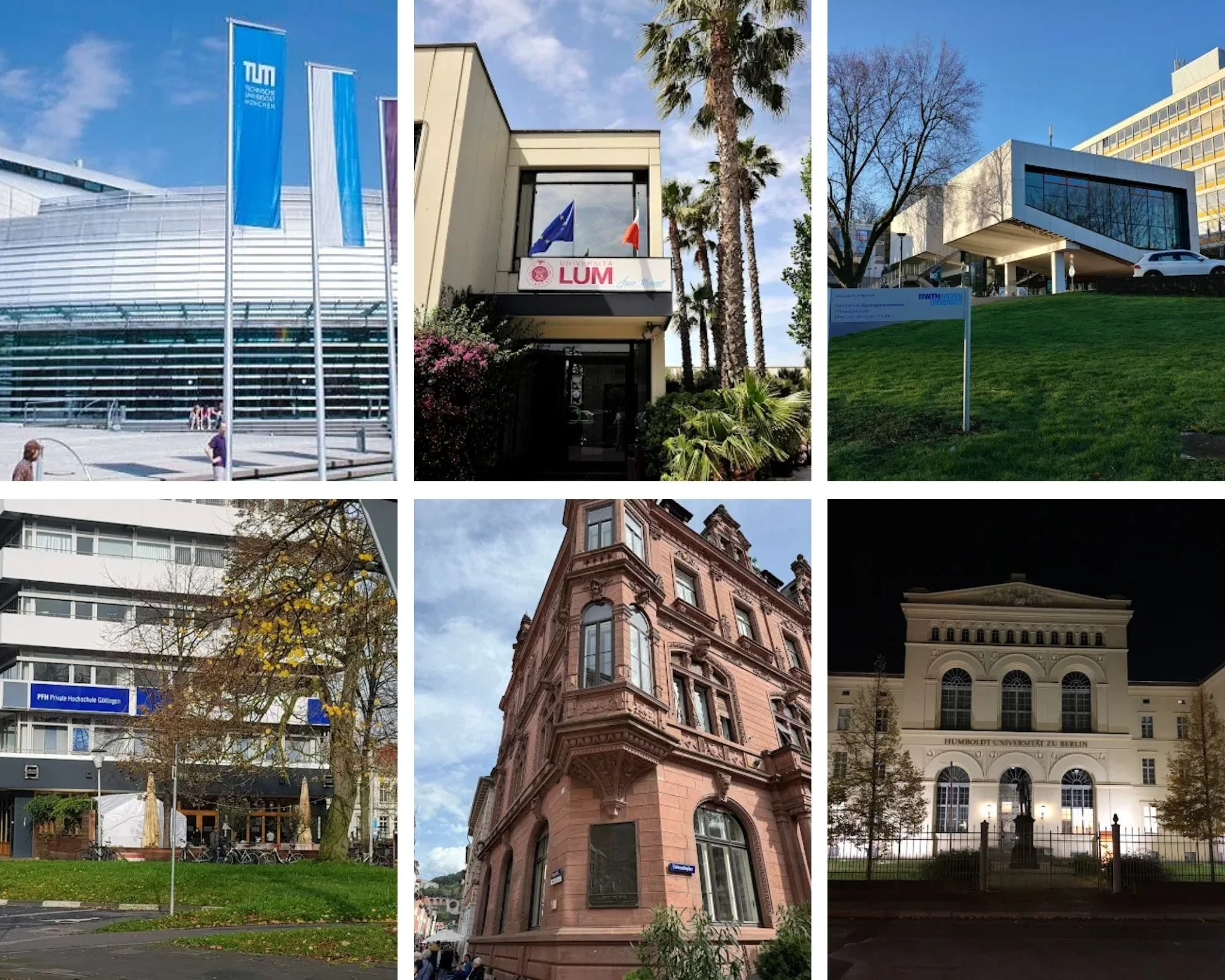
  • Technical University of Munich (TUM) – This is a public university, number one in Germany since years. It also ranks-high among the top international ranking lists. TUM has best engineering and technology programs.
  • Ludwig Maximilian University of Munich (LMU) – Offers a strong research-oriented curriculum. This public university is also well-known globally.
  • RWTH Aachen University – One of the top engineering universities in Germany for international students. It always gets high ranks in international charts of best universities globally.
  • PFH University – Among private universities in Germany for international students, PFH is a leading institution that provides specialized business, management, and engineering programs. With its scholarship options, it offers affordable education. It is much favourite among Indian students and fulfils the foreign education dream of hundreds of students every year.
  • Heidelberg University – Germany’s oldest university with excellent research opportunities. A public university with high rankings.
  • Humboldt University of Berlin – Known for humanities, social sciences, and natural sciences. It is also a preferred choice of many international students.

Public vs. Private Universities in Germany

Germany has two types of universities-Public and Private. Just check out what are the features of these two.

Public Universities:
  • Public universities are funded by the government;
  • Tuition fees are minimal or free, but charge a minimal semester fee.
  • Offer high-quality education but have large student populations.
  • Limited English-taught programs.
Private Universities:
  • Charge tuition fees but universities like PFH offer scholarships to manage finances.
  • They have smaller class sizes and thus education is personalized.
  • They have strong industry connections and offer industry-oriented programs.
  • Many private universities in Germany provide English-taught programs, including PFH University, which specializes in business and engineering fields.

Scholarship Germany for International Students

German universities offer several scholarships for international students. These scholarships help students to bring down finances required for study. Many Universities for International Students in Germany, offer these scholarships:

  • DAAD Scholarships – These are funded by the German government.
  • Deutschlandstipendium – It mostly covers high-achieving students.
  • Erasmus+ – Offers financial aid for students studying in Europe.
  • University Specific Scholarships – Particular universities offer this scholarship. For example, PFH university offers scholarships to exceptional students for its business and engineering programs.

Tuition Fees and Cost of Living for International Students in Germany

Tuition Fees and Cost of Living for International Students in Germany

Take a look at the following features of German universities:

  • Public Universities- Most public universities charge little to no tuition fees, but students have to pay the semester fee and their living costs.
  • Private Universities- Tuition fees range from €10,000 to €30,000 per year. Some offer scholarships.
  • Living Costs- International students need around €850 to €1,200 per month for accommodation, food, transport, and health insurance.
  • Part-Time Job- Students can work up to 20 hours per week to support their living expenses.

Admission Requirements for International Students

It is important to know in advance what the university requires from its students. Every university has a requirement of its own that can be checked from their website. Here are the general points that fit for almost all universities for international students in Germany:

  • Academic Qualifications- High school diploma or bachelor’s degree (for master’s programs).
  • Language Proficiency- IELTS/TOEFL for English-taught programs, TestDaF for German programs.
  • Entrance Exams- Some universities may require entrance exams. This can be checked on the university’s website.
  • Student Visa- Required for non-EU students. Proof of financial stability is also required.
  • Application Process- Submit applications through university portals or uni-assist.

Conclusion

Germany is preferred for it offers an excellent education system. There are a lot of top-ranked universities for international students in Germany, which offer programs at affordable costs. Whether you choose a public university or a private university, you will get top-notch education and career opportunities. Scholarships, low living costs, and a strong job market make Germany an ideal destination for students worldwide.

Frequently Asked Questions

Yes, there are many universities in Germany for international students that have programs taught in English. Generally, master’s programs do not require German proficiency.

There are many universities, but PFH University offers unique programs with a mix of business and engineering at affordable costs and scholarships.

Yes, most public universities in Germany offer tuition-free education, but students need to pay the semester fee and their living costs.

RWTH Aachen, TUM, and PFH University offer excellent engineering programs for international students.

You can apply through DAAD, university-specific scholarships like those offered by PFH University, or external funding programs.

Book Your Free Counselling Now

Categories
blog

Master in Computer Science in Germany

Master in Computer Science in Germany

Master in Computer Science in Germany – Universities, Cost & More

Germany is the top choice for international students who wish to pursue a master in Computer Science in Germany. With its reliable education system, research facilities, and thriving tech industry, the country is a perfect place to establish a successful technological career. Pursuing a degree in Germany is also appealing to Indian students since education at public institutions is free and the degrees are globally recognized. But if you cannot make it to the public universities, then you can consider the best options among the private ones.

Reasons to Study a Masters in Computer Science in Germany

There are numerous advantages to pursuing an MSc in Computer Science in Germany:

  • Famous universities: The top universities to study an MS in Computer Science in Germany for Indian students are many. These universities are recognized globally for their educational quality and research programs.
  • Focus on Getting Teaching and Practice: Preparation course selection, such as PFH University, provides not only subjects but will help students build industry relationships.
  • Affordable education: Tuition fees are low, thanks to public universities and private ones like PFH University that lower the study budget for students and give them the required exposure that they need.
  • Industry connections: Germany is home to world tech companies such as SAP, Siemens, and Bosch, meaning that there are multiple job opportunities at leading organizations.
  • Internships during studies: A master degree in computer science in Germany opens doors to internships, providing practical experience that boosts employability.
  • Scholarships: A wide range of financial aid options for easier studies and living.

Top Universities for a Masters in Computer Science in Germany

Top Universities for a Masters in Computer Science in Germany

The master’s in Computer Science in Germany can be pursued via many leading universities. Here you can find some of the top universities in Germany for masters in Computer Science. These universities are top public universities for many courses including CS.

  • Technical University of Munich (TUM)
  • University of Stuttgart
  • RWTH Aachen University
  • Heidelberg University
  • PFH University — Among the private universities, PFH stands among the top institutions to pursue master’s courses for Indian students. The university is known for its practical education based on researched material. Additionally, individualized tutoring and emphasis on employability make this institution a preferred one.

Eligibility Criteria MS in Computer science in Germany

Every university may have its eligibility criteria. Here you can find a list of criteria that most universities need to apply for a master in Computer Science in Germany:

  • Bachelor’s degree in Computer Science or related field.
  • A competitive GPA (varies by university).
  • Language Proficiency Test: IELTS or TOEFL for programs in the English language, German language certificates for programs in the German language.
  • SOP and LOR.
  • Some universities may even require GRE scores.

Unsure, whether you fulfill the list or not? PFH University can simplify the process with clear guidance and support for international students.

Study Cost for a Master’s in Computer Science in Germany

When finding an MS in computer science in Germany, students are concerned about fees and living costs. There are many universities where you can get a masters in Computer Science in Germany at an affordable fee. Furthermore, there are cities where Living and studying in Germany is very affordable compared to many other countries. 

The public universities here cost roughly €300–€500 a semester. However, every student cannot fulfill their eligibility criteria. The option for them is to look for some good private universities that charge a little high but offer many advantages like scholarships that help in bringing down the cost. You can consider private colleges such as PFH University which charges tuition fees of around €5,000 a semester but offers scholarships to Indian students. 

For those looking for an MS in computer science in Germany for Indian students fees may note that the living cost lies anywhere between €850 to €1,200 per month depending on the city.

MS in Computer Science in Germany Scholarships

There are many scholarship options available for students who wish to pursue a master in Computer Science in Germany. These scholarships are:

  • DAAD Scholarships
  • Erasmus+ Scholarships
  • Financial aid from the university itself

PFH University also provides merit-based scholarships to help talented students further their studies.

Application Process for Masters in Computer Science in Germany

Typically, the application process for a master in Computer Science in Germany requires the following:

  • Research universities and programs: Look for schools (like PFH University) that offer degree programs that are in line with your sustainability goals.
  • Check requirements: Start by looking at the academic, language, and exam requirements.
  • Prepare documents: Gather your SOP, LORs, transcripts, resume, and test scores.
  • Apply: Submit your application via the university sites or through platforms like uni-assist.
  • Attend interviews: Some programs may need you to be interviewed.
  • Organize finances: Get scholarships, student loans, or secure funding.
  • Apply for a visa: Once you have your admission letter, apply for your visa.

Conclusion

A master in Computer Science in Germany combines quality education, research, and industry connection. With affordable public universities and specialized private universities like the PFH University students can get admission to their required programs. PFH University focuses not only on academic excellence but also on practical skills and career readiness, preparing graduates for the global tech industry. You can read about the benefits of being at PFH from our blog <Top 10 Benefits of Studying at PFH University in Germany>. Begin your academic journey with a master in Computer Science in Germany at PFH University — where education meets innovation and career growth.

Frequently Asked Questions

Germany offers high-quality education with state-of-the-art infrastructure for research and also has close connections to the tech industry. All these factors make it an ideal destination for a master in Computer Science in Germany.

Tuition is free of cost at public universities in Germany, but they charge around €300–€500 as a semester fee. Private universities have tuition fees starting at €5,000 per semester but in turn, they may offer scholarships.

Many German universities, including PFH University, have master’s programs that are completely taught in English.

DAAD, Erasmus+, and university-specific scholarships, as well as merit-based scholarships at PFH University, are all available.

Most programs are MS/MSc, but some universities offer M Tech equivalents focused on applied computer science.

Book Your Free Counselling Now