Categories
blog

MSc in Germany for International Students

MSc in Germany for International Students

MSc in Germany for International Students

Over the past few years, MSc in Germany for international students has become a preferred career plan for many Indian students rather than being just an option. The reason is that Germany has a strong reputation for its research-focused universities, practical based teaching methods, and degrees that are respected across the world. In fact, data from the German Academic Exchange Service (DAAD) shows that Germany hosts more than 450,000 international students, making it one of Europe’s most welcoming study destinations.

But pursuing an MSc in Germany for international students is not only about getting a postgraduate qualification. It is about attending a university where the theoretical part is blended with real-world applications, the lecturers are the industry experts and researchers who share their experience with the students, and the students get to know one of the biggest and most prosperous economies in the world. For most, it is the launching point of their international career in the land of innovation and forward thinking.

Why Choose Germany for an MSc?

There are several practical reasons why students prefer an MSc in Germany for international students:

1. Low or No Tuition Fees
Most public universities charge very minimal tuition fees. Students only have to pay a semester fee, which is between €150–€350.

2. Globally Valued Degrees
A degree from German universities has a high value globally as Germany provides strong academic standards and research focus.

3. Strong Economy and Industry Links
Germany is the largest economy in Europe and also is a home to global companies in engineering, IT, automotive, and manufacturing sectors.

4. English-Taught Programs
MSc programs mainly are taught in English. This makes adaptation easy for international students.

These benefits make MSc in Germany a strong choice compared to other destinations.

Popular MSc Courses in Germany

Popular MSc Courses in Germany

When planning an MSc in Germany for international students, the most important thing is choosing the right course. Engineering fields remain highly preferred which include:

  • MBA – Master of Business Administration
  • MSc. in General Management
  • MSc. in UX Management & Design
  • MSc. in AI Management
  • Mechanical, Automotive, and Electrical Engineering
  • Data Science and Artificial Intelligence
  • Renewable Energy
  • Biotechnology
  • Business Analytics
  • Finance

In recent years, among technical programs, MSc computer science in Germany has seen significant growth in demand due to Germany’s fast-growing tech ecosystem. With expansion in AI, data analytics, and cybersecurity, MSc computer science in Germany offers strong job prospects both within Germany and across Europe.

Top Universities in Germany for Masters

Germany has over 400 higher education institutions. Several of them are ranked among the best worldwide and are especially recognized for their research and innovation. These include:

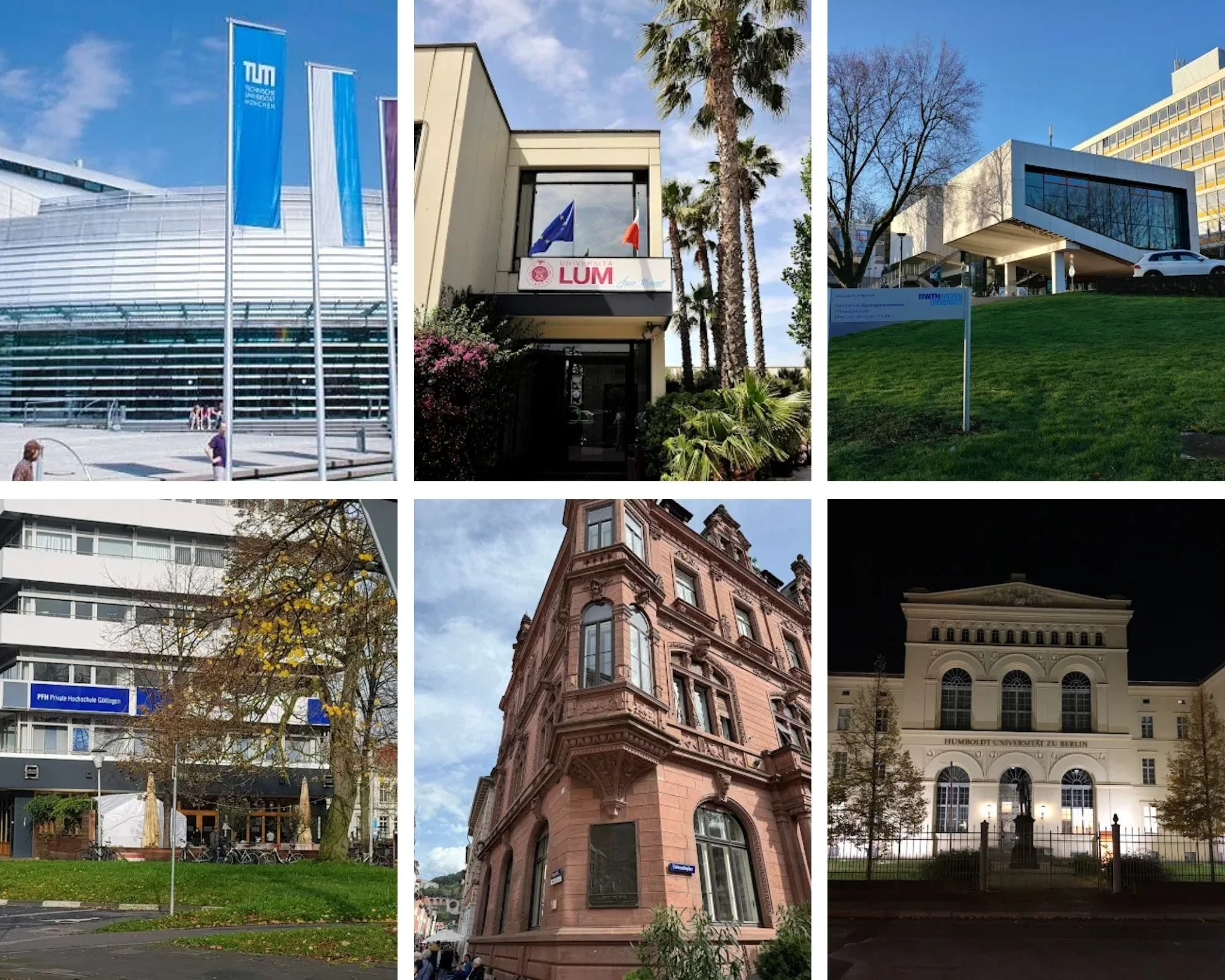
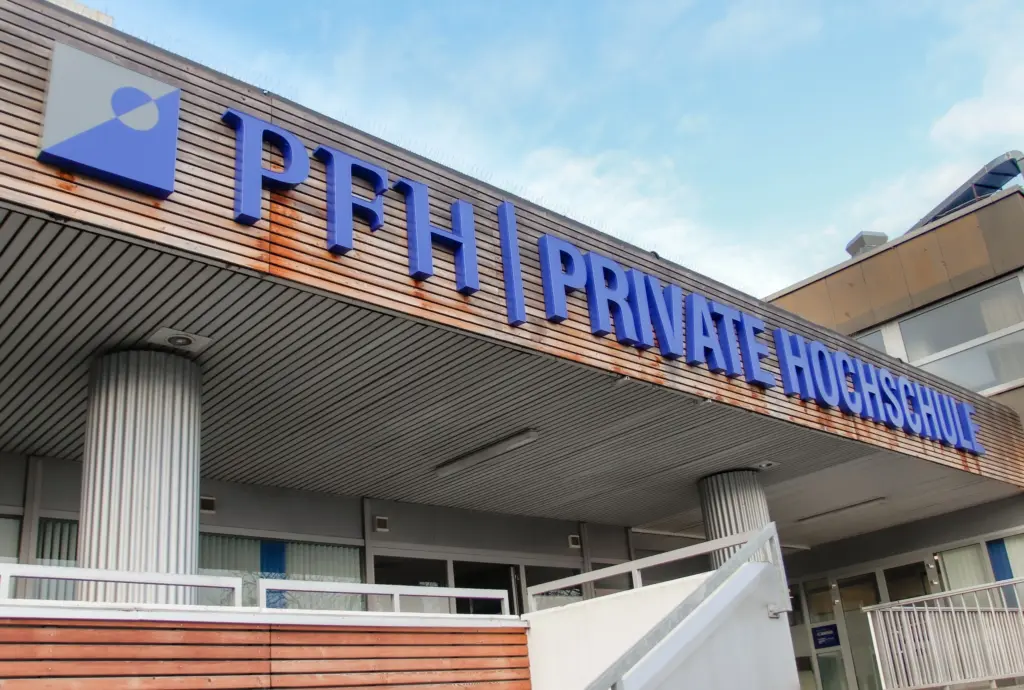
  • PFH University of Applied Sciences
  • Technical University of Munich known as TUM
  • RWTH Aachen University
  • Heidelberg University
  • Karlsruhe Institute of Technology or KIT

These schools are the top universities in Germany for masters which provide research-oriented programs with academic rigor. They also have solid industry collaborations. One must base their decision for the right institution based on the course structure, research possibilities, and career objectives. 

Hence, students must consider multiple universities in Germany for masters before finalizing their choices.

Admission Requirements for MSc in Germany

Admission Requirements for MSc in Germany

MSc in Germany for international students application requirements generally consist of:

  • A recognized Bachelor’s degree in a relevant field
  • Minimum academic percentage, usually above 65–70% for competitive programs
  • IELTS or TOEFL for English-taught programs
  • GRE – required by some technical universities
  • Statement of Purpose or SOP
  • Letters of Recommendation

To apply for masters in Germany for Indian students, APS certification has become compulsory for getting a student visa. The admission process is competitive, but careful preparation of documents improves the chances of securing masters in Germany for international students.

Cost of Studying and Living

A major advantage of pursuing an MSc in Germany for international students is financial affordability.

  • Tuition Fees: Public universities don’t charge tuition fees but need a small semester contribution.
  • Living Expenses: According to DAAD estimates, students require €934 per month for rent, food, insurance, transport, and personal expenses.

MSc in Germany students must also open a blocked account. The overall expenses are much lower as compared to the US or UK, , which makes masters in Germany for Indian students more attractive.

Scholarships for International Students

Although tuition fees are affordable, students can also secure scholarships in order to cover their living expenses. Some common scholarships are: 

  • DAAD Scholarships
  • Deutschlandstipendium
  • University-specific merit scholarships

These scholarship options support masters in Germany for international students who have academic excellence or need financial support.

Career Opportunities After MSc

Germany provides good career options after studies. After completing MSc in Germany for international students, can get an 18-month stay visa for finding a job. Germany has a shortage of qualified professionals in: 

  • Information Technology and Software Development
  • Engineering
  • Health Care
  • Research and Innovation

Tips to Successfully Secure Admission

Getting into a good MSc program requires planning:

  • Begin research at least 12 months before.
  • Shortlist universities and programs carefully.
  • Write a personalized SOP to highlight your academic and career goals.
  • Apply before deadlines.
  • Prepare finances early.

Indian applicants planning masters in Germany for Indian students should also track visa timelines and APS processing carefully.

Conclusion

Deciding to pursue an MSc in Germany for international students is a strategic move to access global education as well as career growth. The combination of low tuition fees, great academic standards, and brilliant career opportunities make Germany a favorable destination for ambitious students globally.

It does not matter if you are considering an MSc in Germany in engineering, business, or MSc computer science in Germany, the country provides a strong academic infrastructure and industry exposure.

At PFH University of Applied Sciences, we guide students through application support, APS process, blocked account assistance, and visa documentation to make your journey toward masters in Germany for international students smooth and stress-free.

Frequently Asked Questions

Germany is a good option due to the three factors education is excellent, prices are affordable, and the labor market is stable.

In most English-taught programs, it isn’t compulsory at the beginning, though picking up the language during your studies helps a lot later.

It is generally about two years as most courses are planned for four semesters.

Not compulsory, but some technical institutions need it for a few programs.

This depends on the course structure and university. However, most masters programs have internships or industry projects.
Book Your Free Counselling Now

Categories
blog

Universities for International Students in Germany

Universities for International Students in Germany

Universities for International Students in Germany

Germany is an academic hub chosen by every third international student for the reason that it blends latest innovation with history. In addition, it has a strong economy, globally recognized universities, and a thriving job market. All these offerings make studying in Germany an investment for a bright future. 

Whether you want to study engineering, business, or social sciences, German universities are there to equip you with practical skills and real-world exposure. Furthermore, it has so many English-taught programs and scholarships to offer luring ambitious students from all over the world. This guide highlights the best universities for international students in Germany, the advantages of studying here, tuition fees, scholarships, and the admission requirements.

Why Study in Germany as an International Student?

Studying in Germany come with many advantages. These benefits attract international students every year. Let us have a look at what these merits are:

  • Public and private universities in Germany offer Affordable Education to all international students.
  • German universities are among the world’s best that offer High-Quality Education.
  • Degrees from German universities are Globally Recognized.
  • Universities in Germany for international students in English offer a Diverse Range of Programs.
  • Graduates from a German university can find employment quickly as the country has a Strong Job Market.
  • Germany has a rich cultural heritage and a diverse student community with a Vibrant Student Life.

Best Universities for International Students in Germany

Best Universities for International Students in Germany

Germany has many universities that have high international rankings. They are known for their excellent education and research. Here are some of the best universities for international students in Germany (private and public):

  • Technical University of Munich (TUM) – This is a public university, number one in Germany since years. It also ranks-high among the top international ranking lists. TUM has best engineering and technology programs.
  • Ludwig Maximilian University of Munich (LMU) – Offers a strong research-oriented curriculum. This public university is also well-known globally.
  • RWTH Aachen University – One of the top engineering universities in Germany for international students. It always gets high ranks in international charts of best universities globally.
  • PFH University – Among private universities in Germany for international students, PFH is a leading institution that provides specialized business, management, and engineering programs. With its scholarship options, it offers affordable education. It is much favourite among Indian students and fulfils the foreign education dream of hundreds of students every year.
  • Heidelberg University – Germany’s oldest university with excellent research opportunities. A public university with high rankings.
  • Humboldt University of Berlin – Known for humanities, social sciences, and natural sciences. It is also a preferred choice of many international students.

Public vs. Private Universities in Germany

Germany has two types of universities-Public and Private. Just check out what are the features of these two.

Public Universities:
  • Public universities are funded by the government;
  • Tuition fees are minimal or free, but charge a minimal semester fee.
  • Offer high-quality education but have large student populations.
  • Limited English-taught programs.
Private Universities:
  • Charge tuition fees but universities like PFH offer scholarships to manage finances.
  • They have smaller class sizes and thus education is personalized.
  • They have strong industry connections and offer industry-oriented programs.
  • Many private universities in Germany provide English-taught programs, including PFH University, which specializes in business and engineering fields.

Scholarship Germany for International Students

German universities offer several scholarships for international students. These scholarships help students to bring down finances required for study. Many Universities for International Students in Germany, offer these scholarships:

  • DAAD Scholarships – These are funded by the German government.
  • Deutschlandstipendium – It mostly covers high-achieving students.
  • Erasmus+ – Offers financial aid for students studying in Europe.
  • University Specific Scholarships – Particular universities offer this scholarship. For example, PFH university offers scholarships to exceptional students for its business and engineering programs.

Tuition Fees and Cost of Living for International Students in Germany

Tuition Fees and Cost of Living for International Students in Germany

Take a look at the following features of German universities:

  • Public Universities- Most public universities charge little to no tuition fees, but students have to pay the semester fee and their living costs.
  • Private Universities- Tuition fees range from €10,000 to €30,000 per year. Some offer scholarships.
  • Living Costs- International students need around €850 to €1,200 per month for accommodation, food, transport, and health insurance.
  • Part-Time Job- Students can work up to 20 hours per week to support their living expenses.

Admission Requirements for International Students

It is important to know in advance what the university requires from its students. Every university has a requirement of its own that can be checked from their website. Here are the general points that fit for almost all universities for international students in Germany:

  • Academic Qualifications- High school diploma or bachelor’s degree (for master’s programs).
  • Language Proficiency- IELTS/TOEFL for English-taught programs, TestDaF for German programs.
  • Entrance Exams- Some universities may require entrance exams. This can be checked on the university’s website.
  • Student Visa- Required for non-EU students. Proof of financial stability is also required.
  • Application Process- Submit applications through university portals or uni-assist.

Conclusion

Germany is preferred for it offers an excellent education system. There are a lot of top-ranked universities for international students in Germany, which offer programs at affordable costs. Whether you choose a public university or a private university, you will get top-notch education and career opportunities. Scholarships, low living costs, and a strong job market make Germany an ideal destination for students worldwide.

Frequently Asked Questions

Yes, there are many universities in Germany for international students that have programs taught in English. Generally, master’s programs do not require German proficiency.

There are many universities, but PFH University offers unique programs with a mix of business and engineering at affordable costs and scholarships.

Yes, most public universities in Germany offer tuition-free education, but students need to pay the semester fee and their living costs.

RWTH Aachen, TUM, and PFH University offer excellent engineering programs for international students.

You can apply through DAAD, university-specific scholarships like those offered by PFH University, or external funding programs.

Book Your Free Counselling Now

Categories
blog

German Education System: Guide for International Students

German Education System

How Is The Education System In Germany?

The German education system is structured to provide a comprehensive and practical learning experience, which is why many international students are attracted to it. For international students, Germany offers a supportive and diverse academic environment. The country is home to numerous universities that cater to various fields of study, making it an ideal place for students looking to broaden their educational horizons.

The German education system is renowned for its excellence with universities providing high-quality education, modern facilities, and a rich cultural experience. This blog will delve into the various facets of the German education system, focusing on what makes it appealing to students, especially those looking to pursue higher education like an MS degree.

German Education System For International Students

Germany’s higher education system is divided into three types of institutions: Universities, Universities of Applied Sciences, and Colleges of Art, Film, and Music. Each of these institutions plays a crucial role in the German education system, offering a range of programs and degrees.

Types Of Universities In Germany

  1. Academic Universities (Universitäten): These institutions focus on research and offer numerous academic disciplines to be chosen by students as per their interests. They are ideal for students seeking in-depth theoretical knowledge and are the foundation of the German education system. These universities are perfect for students, passionate about pursuing research and developing a deep understanding of their chosen fields.
  2. Universities of Applied Sciences (Fachhochschulen): Emphasizing practical and professional education, these universities are perfect for those who want hands-on experience. PFH University is a prime example, offering industry-relevant programs that prepare students for the job market. These institutions often collaborate closely with industries, ensuring that the curriculum is aligned with the latest industry trends and demands.
  3. Colleges of Art, Film, and Music: These specialized institutions offer programs in creative fields, contributing to the diverse offerings of the German education system. They provide a nurturing environment for aspiring artists and performers, with programs that focus on honing creative skills and fostering artistic expression. These colleges often host exhibitions and performances, providing students, with a platform to showcase their talents.

Popular Programs To Study At German Universities

German Education System

German Universities offer a variety of programs that are highly sought after. The following are the domains in which one can find the latest programs with updated curricula some of which are based on the research being carried out in the university.

  • Engineering and Technology: Renowned for its engineering programs, particularly in fields like mechanical and automotive engineering. PFH University’s engineering programs are designed to integrate advanced technical skills with practical experience.
  • Business and Economics: With Germany’s strong economy, programs in business administration and economics are more popular. PFH University’s business programs emphasize strategic thinking, innovation, and global business practices.
  • Computer Science and IT: Ideal for those looking to study MS in Germany in cutting-edge fields. PFH University offers state-of-the-art computer science programs focussing on the latest technologies and industry practices.
  • Natural Sciences: Programs in physics, chemistry, and biology are well-regarded. PFH University’s natural science programs provide a robust foundation in scientific principles integrated with research opportunities.

Grading System Of German Universities

The German education system employs a unique grading system that might be different from what international students are accustomed to. Grades range from 1.0 (very good) to 5.0 (fail), with intermediate grades like 2.0 (good), 3.0 (satisfactory), and 4.0 (sufficient). Understanding this grading system is essential for students to gauge their academic performance accurately.

German Universitiy Intakes For International Students

The German education system offers two primary intakes for international students: winter and summer. The winter intake begins in October, while the summer intake starts in April. It is crucial to keep track of these intakes and the associated deadlines to ensure a smooth application process. PFH University, for instance, has specific deadlines for each intake, and prospective students should plan accordingly.

PFH University, like many German institutions, also offers two main intakes: winter and summer. The winter intake begins in October, and the summer intake starts in April. Here are the specific deadlines for PFH University:

Winter Intake:

  • Application Deadline: July 15, each year
  • Semester Start: October 1, each year

Summer Intake:

  • Application Deadline: January 15, each year
  • Semester Start: April 1, each year

Staying aware of these deadlines is critical for a successful application. We recommend checking on the university website for any changes which will help you to plan for your applications without the hassles of being late.

Documents Required To Apply To German Universities

Applying to universities in Germany requires a set of specific documents. Here is a list of the essential documents needed. These documents are required to apply to PFH University also which include:

  • Academic Transcripts: Detailed records of your previous academic performance.
  • Language Proficiency Proof: Most universities require proof of English proficiency through tests like IELTS. Some programs may also require German language proficiency.
  • Statement of Purpose (SOP): An essay explaining your motivation for studying in Germany and your chosen field.
  • Letters of Recommendation (LORs): Usually from previous professors or employers.
  • CV/Resume: A detailed account of your academic and professional history.
  • Passport Copy: A valid passport is necessary for identification.
  • Passport-sized photographs: Usually required for application forms and student ID.

For those aiming to study in Germany, ensuring all documents are in order and submitted before the deadline is critical to the application process.

Conclusion

The German education system is designed to provide a high-quality, research-driven education accessible to students from all over the world. Whether you aim to study MS in Germany or pursue another field, understanding the structure and requirements of the German education system is essential. With institutions like PFH University offering robust programs and clear intakes, Germany stands out as a premier destination for higher education. Remember to prepare your documents meticulously and keep track of deadlines to enhance your chances of admission to the best German university with high acceptance rates.

For more detailed information about the German education system, including specific deadlines and requirements, you can refer to comprehensive resources and guides provided by institutions like PFH University and official German educational portals.

Book Your Free Counselling Now

Categories
blog

MTech in Germany

MTech in Germany
MTech in Germany

MS V/S MTech in Germany

Germany is renowned for its precision engineering, cutting-edge research, and robust industrial base. Thus, it stands as an attractive destination for pursuing a Master of Technology (MTech) degree. Pursuing an MTech in Germany for Indian students offers a unique opportunity to experience world-class education in a global setting. Whether you’re an aspiring computer scientist, mechanical engineer, or electrical systems enthusiast, Germany offers a plethora of specialized MTech programs.. In this comprehensive article, we explore the nuances of studying MTech in Germany. We’ll discuss about Germany MTech fees to help students make informed decisions about their academic pursuits and financial planning for studying abroad. We’ll also cover the associated costs, scholarships, and the exciting career prospects that await the aspiring candidates. You’ll find other exciting programs directly related to MTech in Germany.

Recommended: Engineering in Germany for Indian Students  

Getting a Global Perspective through MTech from Germany

Earning an MTech degree from Germany is akin to opening a treasure chest of opportunities. Here’s why: 

Getting a Global Perspective through MTech from Germany

German universities consistently rank high in global university rankings. Their rigorous academic programs, world-class faculty, and state-of-the-art research facilities ensure a top-notch education.

MTech programs in Germany encourage interdisciplinary collaboration. Whether it’s combining computer science with mechanical engineering or exploring sustainable energy solutions, students gain a holistic understanding of their field.

German universities maintain strong ties with industry giants. Collaborative projects, internships, and guest lectures provide students with real-world exposure and networking opportunities. Studying an MTech in Germany for Indian students opens doors to cultural exchange and networking opportunities in one of Europe’s leading technological hubs.

MTech in Germany Cost is surely a Budget-Friendly Choice

The cost of pursuing an MTech from Germany is remarkably affordable. Most universities charge minimal or no tuition fees for international students. In fact, 11 out of 16 states in Germany do not charge any tuition fees at all. For the remaining states, the maximum tuition fee is capped at 500 euros per year. However, it’s essential to consider other expenses such as accommodation, health insurance, and daily living costs. Thus, we can say MTech in Germany costs less than other countries and this overall affordability makes Germany an attractive option for students seeking quality education without breaking the bank.

Recommended: Cost of Masters in Germany for Indian Students  

MTech in Germany for Indian Students is a Plethora of Engineering Opportunities

Indian students find a second home in Germany. The multicultural environment, English-taught programs, and friendly locals create a welcoming atmosphere. There are over 9,000 master’s study programs available in Germany, providing students with a wide array of options, with popular M.Tech specializations being Computer Science, Mechanical Engineering, Electrical Engineering, Civil Engineering, Industrial, Lightweight, mobility, and automation.

Germany MTech Fees: Knowing the Financials

Exploring Germany MTech fees reveals the country’s commitment to providing affordable education without compromising quality. Germany MTech fees are comparatively lower than those in many other countries, making it an economical choice for international students. While tuition fees are minimal, administrative charges may apply. Some universities offer tuition waivers or scholarships based on academic merit. It’s crucial to research individual universities and their fee structures to make an informed decision. Remember to account for living expenses, transportation, and leisure activities.

MTech in Abroad with Scholarship: Funding Your Dreams

Pursuing an MTech abroad with a scholarship offers Indian students a remarkable opportunity to access world-class education while alleviating financial burdens. Germany provides multiple opportunities for scholarships to international students. These scholarships cover tuition fees, research costs, and living expenses. Whether it’s the DAAD scholarship, Erasmus+, or university-specific grants, Indian students can explore the following scholarships to ease their financial burden for Mtech in Germany. Diligent research can lead to financial support for your MTech journey. 

  • DAAD (German Academic Exchange Service), Erasmus+ offers scholarships such as the Development-Related Postgraduate Courses (EPOS) Scholarship and other funding opportunities6.
  • Heinrich Böll Stiftung, Konrad Adenauer Foundation, and Bayer Stiftungen-Kurt Hansen Science Scholarship are other options7.
  • The Royal Society International Exchange Programme, Jeff Schell Fellowships, and Fraunhofer-Bessel Research Award are also available6.
  • Additionally, there are 154+ scholarships specifically for Indian students to study in Germany.

Salary After MTech in Germany: A Lucrative Path

Germany’s job market is robust, offering ample employment opportunities for MTech graduates. Whether you choose software development, data science, or cybersecurity, your MTech qualification opens doors to exciting career trajectories. The quality of work-life is excellent, and competitive employers hire fresh MTech graduates from German universities.

Graduates with an MTech in Computer Science from Germany are highly sought after. The German job market values technical expertise, and professionals with advanced degrees enjoy competitive salaries. Whether you choose software development, data science, or cybersecurity, your MTech qualification opens doors to exciting career trajectories. 

However, the salary after MTech in a specific field can vary depending on factors such as specialization, experience, and industry, but graduates often command competitive compensation packages reflective of their advanced skills and expertise. Graduates with an MTech in Engineering can potentially earn an average salary of EUR 55,000 per year.  

Other Master Courses in Germany that Directly Relate to MTech Programs

Apart from MTech in Germany, Indian students are offered a diverse range of master’s courses. Let’s explore some intriguing options offered at PFH University: 

Best University to Study MIM in Germany ​

Dive into materials science, design optimization, and manufacturing techniques for lightweight structures. Industries like automotive, aerospace, and renewable energy eagerly welcome graduates from this program. You can find jobs that require the development of fuel-efficient vehicles, sustainable aircraft, and eco-friendly energy solutions.

This program combines computer science and engineering, equipping students with skills in automation, robotics, and digital transformation. However, electrical engineering, mechanical engineering, computer science, and industrial engineering graduates are eligible to study in the program. The program aims to shape the future of smart factories and autonomous systems. 

As the world shifts toward sustainable transportation, this program delves into electric vehicles, urban mobility planning, and innovative mobility solutions. Graduates who are enthusiastic about materials, locomotion, and lightweight construction can be part of this revolution. 

A multidisciplinary field, industrial engineering focuses on efficiency, optimization, and process management. Graduates contribute to sectors like manufacturing, logistics, and consulting. 

Conclusion

MTech from Germany offers a blend of academic rigor, practical exposure, and global perspectives. Whether you’re drawn to the historic charm of Heidelberg or the vibrant tech scene in Berlin, Germany awaits with open arms for your MTech adventure. With its affordable tuition fees and high-quality education, pursuing an MTech in Germany for Indian students is an attractive option for seeking academic excellence abroad. Choosing to pursue an MTech in Germany for Indian students as well as other international students, offers a diverse learning environment and exposure to cutting-edge research, contributing to personal and professional growth. It’s your call, choose your master’s/MTech study destination wisely. 

Frequently Asked Questions

Pursuing an MTech in Germany is attractive due to affordable tuition fees, a welcoming multicultural environment, and English-taught programs.

Consider expenses such as accommodation, health insurance, and daily living costs while studying in Germany.

Yes! Indian students can explore scholarships offered by organizations like DAAD (German Academic Exchange Service). These scholarships help ease the financial burden and make studying in Germany even more accessible.

Graduates are highly sought after in the German job market. Whether in software development, data science, or cybersecurity, MTech qualifications open doors to exciting career trajectories. Salaries vary but often reflect competitive compensation packages. 

Germany offers diverse options:

  • MS in Lightweight Engineering: Explore materials science and design optimization for lightweight structures.
  • MS in Digitalization and Automation: Combine computer science and engineering for automation and robotics.
  • MS in New Mobility and Micromobility: Dive into sustainable transportation and innovative mobility solutions.
  • MS in Industrial Engineering: Optimize processes in manufacturing, logistics, and consulting.
  • MS in General Management: Develop leadership skills and business acumen.

Remember, Germany provides a rich educational landscape for various interests and career paths!  

Book Your Free Counselling Now